


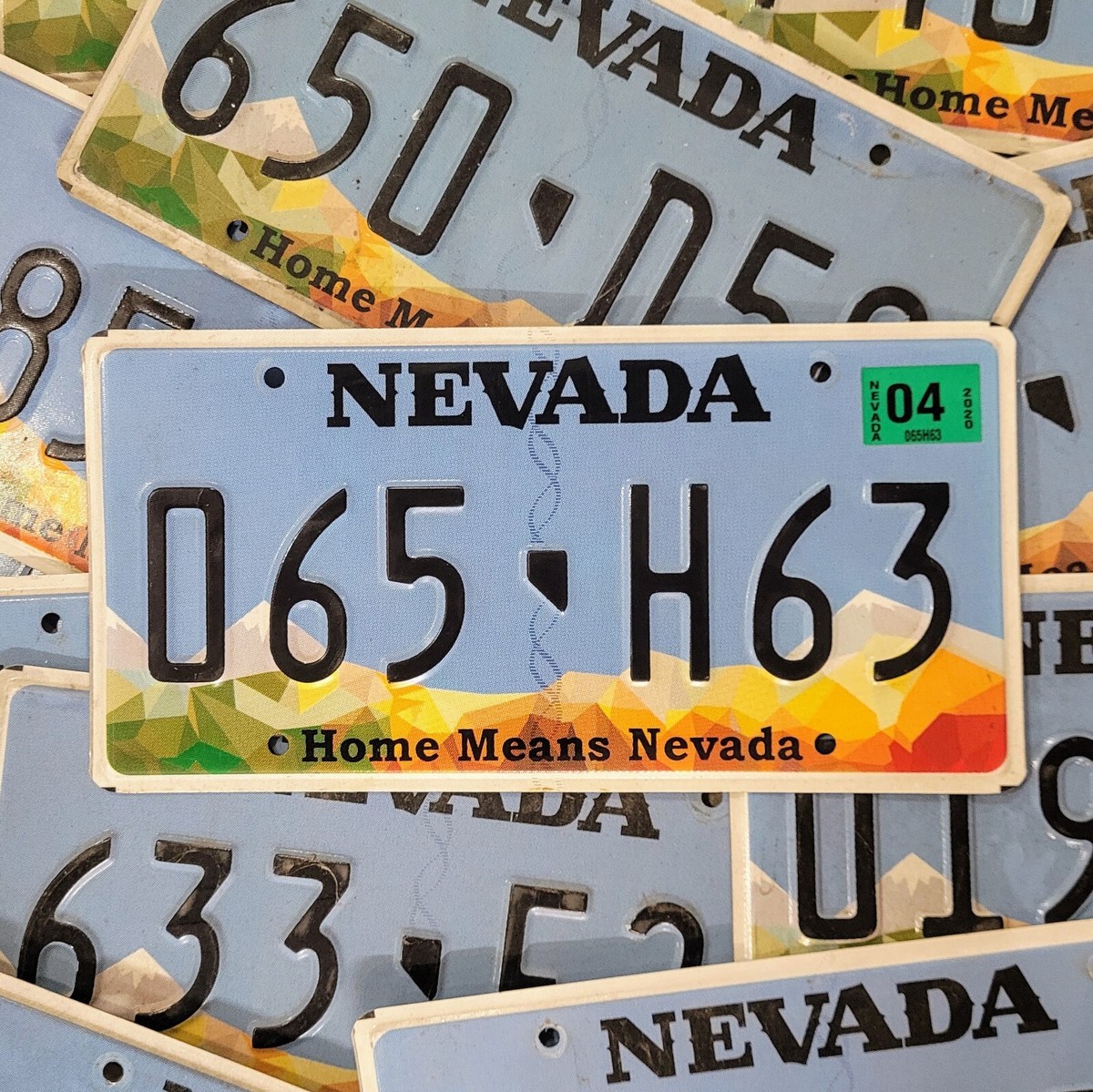
 If you’ve just moved to Las Vegas or Henderson and renewed your car registration for the first time, you probably did a double take. Nevada’s bill isn’t a flat fee like the $50 or $75 sticker you might be used to elsewhere — it’s three separate charges stacked together, and for a newer or higher-value vehicle, the total can run into the hundreds. Here’s how that number gets built, why it’s structured the way it is, and what Nevada residents get in return for paying it.
How the Bill Is Actually Built
Nevada registration is really three line items, according to the Nevada DMV: a flat Registration Fee, a value-based Governmental Services Tax (GST), and, in some counties, a Supplemental GST.
Registration Fee: $33 for most passenger cars, regardless of the vehicle’s value. It funds state road construction and the DMV’s own operating budget.
Governmental Services Tax: This is the part that surprises people. Nevada values your car at 35% of its original MSRP — not what you paid, and not what it’s worth today — then depreciates that figure 5% in year one and 10% each year after, stopping at a floor of 15% of the original valuation. That depreciated number is taxed at 4%, with a $16 minimum. On a two-year-old car with a $20,000 MSRP, that alone comes to roughly $238 a year. GST money funds local governments, school districts, and the state General Fund.
Supplemental GST: Clark and Churchill counties — which covers Las Vegas and Henderson — add a voter-approved extra 1% earmarked specifically for highway construction. On that same $20,000 vehicle, that’s roughly another $60.
Why It Feels Steeper Than Other States
Most states charge a flat or weight-based registration fee that has nothing to do with what your car is worth. Nevada’s GST is closer to a de facto property tax on the vehicle itself — and because it’s based on original MSRP rather than depreciated resale value, a used luxury car can carry a noticeably bigger bill than its actual market value would suggest.
The underlying reason is simple: Nevada is one of a handful of states with no personal income tax. Something has to fund schools, local government, and roads instead, and the GST — alongside sales and gaming tax — does part of that job. Tax Foundation data bears this out: Nevada’s income tax burden is zero, but its combined sales and excise tax burden is among the highest in the country. It isn’t a uniformly low-tax state — it’s a state that collects differently, and vehicle owners feel more of that at the DMV counter than they would elsewhere.
What You’re Not Paying Because of It
The trade-off is real, even if it doesn’t show up on the same bill. Three things Nevada drivers skip because of how the GST is structured:
No state income tax. The single biggest offset — every paycheck is free of a state withholding line.
No separate annual vehicle property tax bill. A number of states — including Virginia, Missouri, Connecticut, North and South Carolina, and Kentucky — bill car owners a second, separate personal property tax each year, often $200 to over $1,000, on top of a normal registration fee. Nevada folds the equivalent of that tax into the GST you already paid at the DMV, so there’s no second bill from the county assessor later in the year.
Low overall property tax rates. Nevada’s general property tax burden ranks near the bottom nationally, which matters more the longer you own a home here. A Review-Journal report on the state’s overall tax burden found Nevada lands in the middle of the pack nationally once every tax is counted — not the lowest, but not the outlier the registration bill alone might suggest either.
What This Means If You’re Moving Here
It’s easy to fixate on one line item — the registration renewal that arrives in the mail — without weighing it against the paycheck that never gets an income tax deduction, or the property tax bill that never doubles as a second car tax. For anyone relocating to Las Vegas or Henderson, the honest comparison is the whole cost-of-living picture, not a single fee.
That’s the same lens worth applying to a home search here: sticker price, HOA dues, and property tax rates can vary block to block across the valley, and the neighborhoods that look most affordable up front aren’t always the cheapest once everything is added up.
If you’re relocating to Las Vegas, Henderson, or the surrounding valley and want a clear-eyed read on the full cost of living — not just the sticker price of a home — reach out to Premier Homes Real Estate; our agents can walk you through neighborhoods, taxes, and total cost of ownership before you commit to a zip code.