


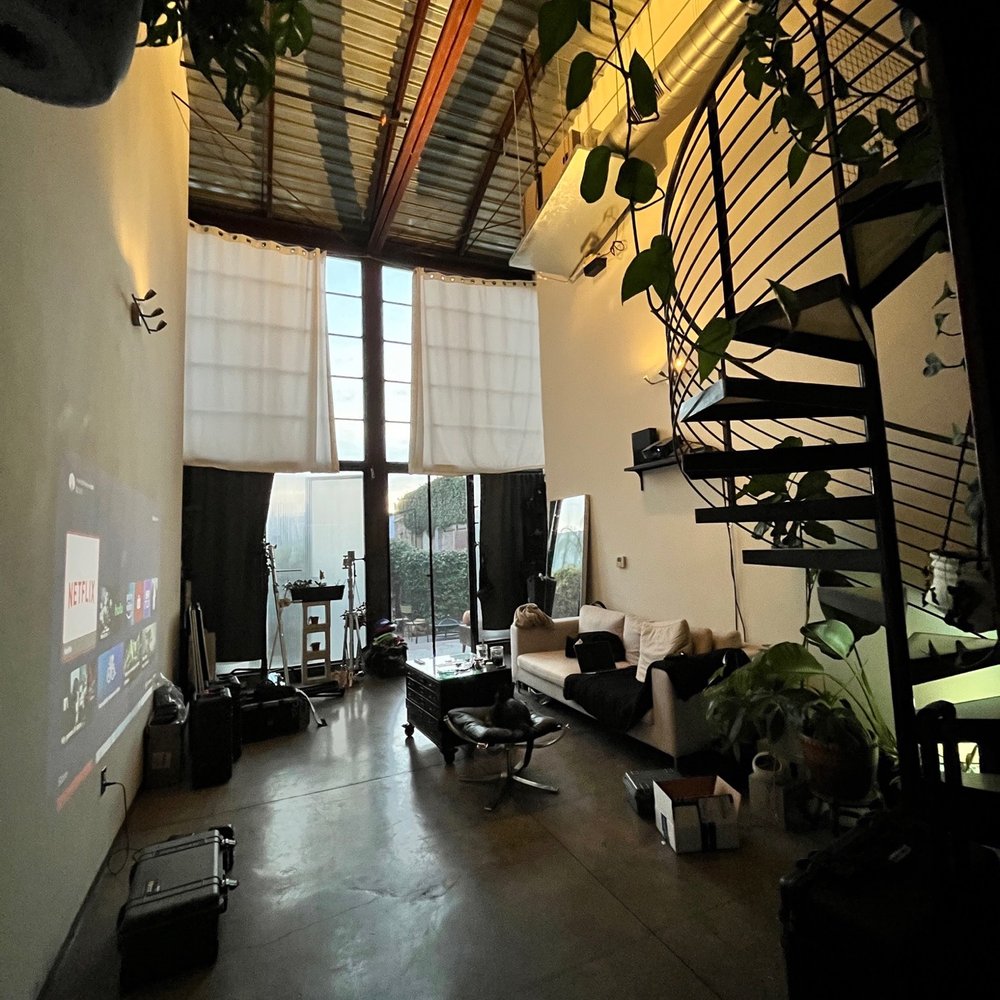
More of our clients are asking the same question: can I live and run my business from the same address? Between the rise of remote work, the growth of the Downtown Las Vegas Arts District, and small business owners looking to cut overhead, live/work living has become one of the fastest-growing lifestyle requests we hear at Premier Homes. But “live/work” actually covers two different situations under valley zoning rules, and knowing which one applies to you — and what it does and doesn’t allow — can save you a costly surprise down the road.
Two Different Live/Work Situations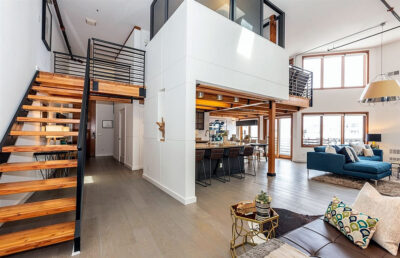
The first is a formally zoned live/work unit — a property built and permitted specifically to combine a residence with a workspace. The City of Las Vegas defines it as a structure that combines a low-intensity nonresidential work space with an integrated residential space, with the residential space subordinate and accessory to the nonresidential use. You’ll find the clearest example of this in the Downtown Las Vegas Arts District, where converted lofts and studios let working artists, gallery owners, and creative entrepreneurs live above or behind their own workspace. The concept traces back to a broader live/work movement that started with artists needing affordable, industrial-style space to both live and create in — part of why the district’s live/work inventory still skews toward working artists today.
The second, far more common, situation is a home occupation: running an income-producing activity out of an ordinary residential home. This covers everything from consultants and online sellers to tutors and freelancers working out of a spare bedroom. It doesn’t require a special zoning designation, but it does come with its own set of city rules.
What You Can Do
For most home occupations, the standard the City of Las Vegas applies is straightforward: the business needs to have no impact on the neighborhood and be essentially invisible to neighbors. Desk-based, phone-based, and online businesses generally qualify without issue. Tutoring is specifically called out as allowed, with up to two students on-site at a time. In a formally zoned live/work unit, you get more latitude, since the space was designed and permitted for both uses — but you’re still bound by unit-specific limits, like how much of the floor area can be used for work versus living space.
 Industries That Thrive in a Live/Work Setup
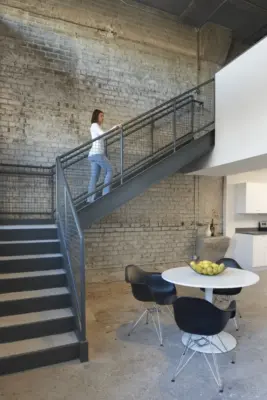
Some industries fit the live/work model more naturally than others, largely because they don’t need much foot traffic or physical inventory. Creative and artistic businesses are the classic example, and the reason the Arts District exists in the first place: painters, photographers, graphic designers, and muralists all do work that’s largely self-contained and easy to tuck into a home studio or loft. Professional and consulting services also fit well, since consultants, bookkeepers, insurance agents, real estate agents, and marketing or IT consultants mostly meet clients by phone, video, or off-site rather than at the front door. Online retail and e-commerce sellers — Etsy shop owners and small resellers who ship product rather than host walk-in customers — are another strong fit, provided storage and shipping activity stay within home occupation limits. Tutoring and coaching businesses line up especially well with the rules, since the two-student, on-site exception was practically written for private tutors, music teachers, and test-prep coaches. And tech-based work, such as software development, virtual assistant services, and remote IT or bookkeeping support, tends to be effectively invisible to the neighbors by design, which is exactly what the city is looking for.
We also regularly hear from clients outside the usual desk-and-laptop mold. Cirque du Soleil aerialists and other circus and stage performers based in the valley often want space where they can train, and coach students, in aerial arts or acrobatics, and musicians and producers frequently ask us about home recording studio setups. Both tend to need more than a standard home occupation allows, since they usually involve non-resident students or clients coming to the property to train or record. That pushes them toward what live/work planning literature calls work/live space — where more work-intensive activity and outside visitors are the point, not the exception — rather than a basic home-based business, and it often calls for a formally zoned live/work or work/live property with the right ceiling height for rigging or the soundproofing a studio needs.
What You Should Not Do
A handful of activities are flatly prohibited from a home occupation, no matter how low-key you try to keep them: sales of weapons, ammunition, or explosives; motor vehicle repair; and commercial food preparation. Customers and employees generally aren’t allowed to come to the residence at all, outside of the tutoring exception above. Running a home occupation also requires a home occupation permit (roughly a $50 fee in Las Vegas) on top of your state business license and Nevada Sales & Use Tax Permit — so it needs to be set up properly before you open your doors, even when those doors are your own front door.
And don’t stop at city rules: if you’re in an HOA community, which describes a large share of the Las Vegas and Henderson valley, the HOA’s covenants can be stricter than the city’s, especially around signage, parking, and customer or delivery traffic. Henderson runs its own business licensing process as well, since requirements shift depending on which city, or unincorporated Clark County, your address falls in.
One Thing to Watch For: Residential Reversion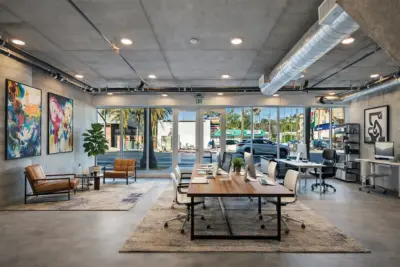
One dynamic worth knowing before you buy: live/work developments, especially newer “lifestyle loft” condo projects, have a well-documented tendency toward residential reversion — drifting back to purely residential use over time, even when the units were originally built and marketed as live/work. That doesn’t make them a bad buy, but it does mean the workspace on paper isn’t a guarantee of an active work community around you five or ten years from now. If keeping the ability to run a business from your unit long-term matters to you, it’s worth asking how a building or HOA has actually evolved, not just how it was originally zoned.
Setting Up the Right Space (and Growing Out of It)
The right move depends on where you are today and where your business is headed. If you’re house hunting and want to make sure a property will actually support how you plan to work from it, Premier Homes Real Estate can help you evaluate a property’s zoning, HOA rules, and layout before you buy or lease, so there are no surprises after closing. And if your home occupation has outgrown the spare bedroom — or you’re ready to lease, buy, or value dedicated commercial or live/work space — Premier Homes Business Brokerage specializes in exactly that kind of transition, helping business owners find space that fits both the work and the budget. It’s a common enough path that live/work planning literature has a name for it: the incubator cycle — a business growing from a spare bedroom, to a live/work unit, to fully dedicated commercial space.
Live/work living can be one of the most efficient ways to run a small business in this valley, but only when it’s set up correctly from day one. Knowing which category you fall into, what’s allowed, and what requires a permit is the difference between a smooth setup and a code enforcement visit.
Whether you’re eyeing a loft in the Arts District or trying to figure out how much room your growing business actually needs, Premier Homes Real Estate and Premier Homes Business Brokerage walk every client through exactly this kind of decision — and that’s true whether you’re closing next month or just starting to think it through. Reach out any time; we’re here for buyers, renters, and business owners across Las Vegas, Henderson, and the rest of the valley.