


Not every business needs a storefront, a loan, or a leap of faith. Some of the most successful small manufacturers in the country started on a spare bedroom desk or in a garage corner, and grew one order at a time until the founder needed real square footage. Craft-based businesses are especially well suited to this path, because the tools of the trade — whether that’s a sewing machine or a 3D printer — tend to be small enough to start with and profitable enough to justify upgrading.
These businesses generally fall into two camps: traditional crafts, where the value is in the maker’s hands and years of skill, and computer-assisted crafts, where a machine does the precision work and the maker’s skill is in design, setup, and finishing. Both can turn into real income. Both can also outgrow a house. Here’s how each one tends to play out.
 Traditional Crafts: Skill-Driven, Slow to Scale, Hard to Automate
Traditional crafts are hand-intensive by definition. That’s their strength — a handmade quality is exactly what customers are paying for — and it’s also their ceiling. You can’t 3D-print your way past the fact that a human has to make each piece.
Woodworking. Cutting boards, small furniture, shelving, wall art. Entry cost is moderate — a table saw, a router, some hand tools — and a garage is plenty of space to start. The scaling problem is dust, noise, and lumber storage; those are usually what push a woodworker into a small warehouse or shop unit long before order volume alone would.
Ceramics and pottery. Mugs, bowls, tile work, custom dinnerware. A wheel and a small kiln fit in a spare room, though kilns draw serious power and put off heat, so many home potters end up in a garage or basement fairly quickly. The real space crunch comes from drying and firing in batches — you need shelving for greenware at every stage, and that adds up fast.
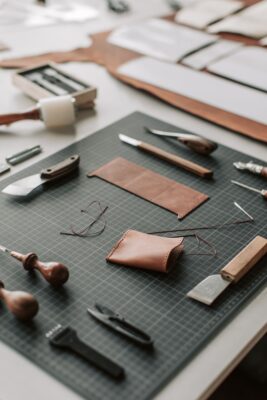
Leathercraft. Wallets, bags, belts, custom goods. This is one of the easiest traditional crafts to start at a kitchen table — hand tools, a cutting mat, and hides take up very little room. It scales slowly because each piece is stitched and finished by hand, so growth tends to come from hiring additional crafters rather than needing more square footage — though bulk hide storage and a cutting/finishing station do eventually want their own room.
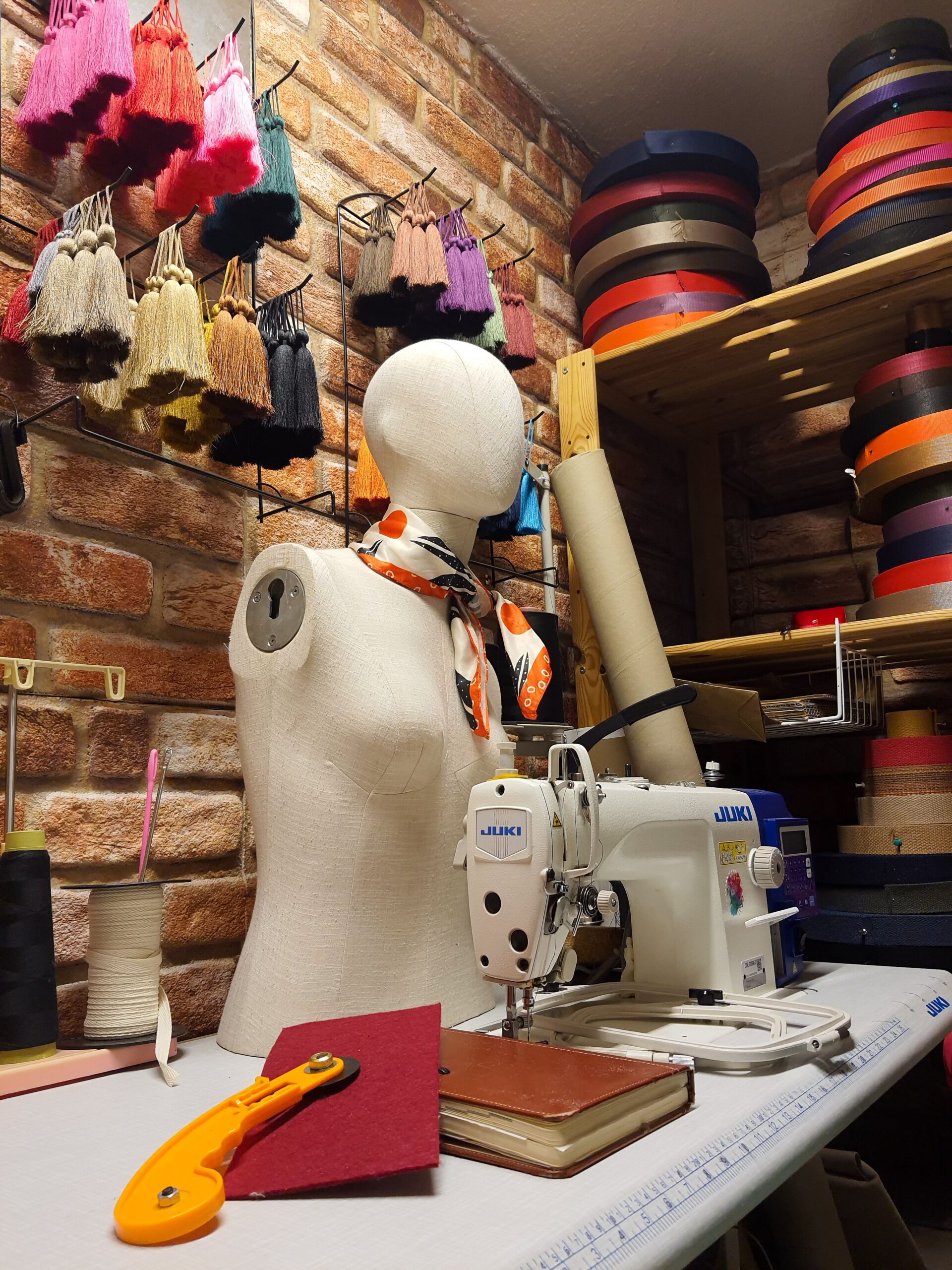
Sewing, quilting, and embroidery. Apparel, quilts, custom embroidery, home goods. A machine or two fits on a table. Fabric storage is the first thing to outgrow a closet, and once you add a second or third machine (or an embroidery machine that runs multi-hour jobs unattended), a dedicated room becomes a small studio, and a small studio becomes a warehouse bay lined with fabric bolts.
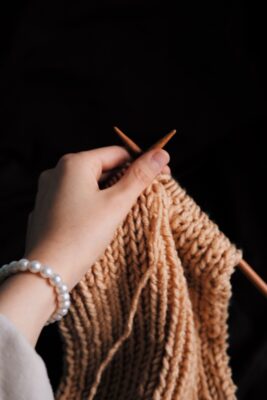 Knitting, crochet, and yarn work. Finished goods or dyed yarn for other makers. About as low-footprint as it gets to launch — needles, a skein winder, maybe a dye pot. Yarn dyers scale into warehouse space mainly for drying racks and inventory, not equipment.
Soap and candle making (non-food, cosmetic). Bar soap, lotion bars, artisan candles. Cheap to start with a few molds and a stovetop or wax melter. Scaling means bigger batches and cure/dry storage — soap needs weeks of curing shelf space, which is usually the first thing that won’t fit at home anymore.
Jewelry and metalsmithing. Beading, wire work, small metal casting. Extremely low barrier to start — a workbench and hand tools. If it grows into metal casting or soldering at volume, ventilation and safety requirements often force a move out of a residential space regardless of order volume.
Traditional-craft pattern: the trigger to move out isn’t the machine, it’s storage — raw material, drying/curing time, and finished inventory. Growth is also capped by hands-on-hours, so many traditional-craft businesses expand by adding crafters before they add a warehouse.
Computer-Assisted Crafts: Machine-Driven, Fast to Scale, Space-Hungry Early
Computer-assisted crafts flip the equation. The machine does repeatable, precise work, which means one person can run several jobs at once — but the machines themselves are bigger, noisier, and often need dedicated ventilation or power from day one.
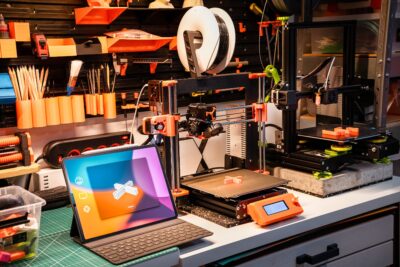 3D printing. Miniatures, functional prints, personalized gifts, prototyping for other businesses. The single easiest computer-assisted craft to launch from home — one printer fits on a desk, and a $200–$800 machine gets you a real product line. It scales beautifully at first: add printers, and you add capacity without adding much space, since printers can be stacked and run unattended overnight. The push to a warehouse usually comes when you’re running 8–10+ printers (heat, noise, and power draw become real issues) or when filament and packaging inventory outgrows a closet.
Laser cutting and engraving. Wood signs, acrylic displays, coasters, personalized gifts. Slightly higher barrier than 3D printing — a decent laser and proper ventilation (venting to the outside, ideally) are non-negotiable even at home. Very fast production once running, which means material storage (sheet goods) becomes a space problem quickly. This is often one of the faster movers to warehouse space, simply because sheet material doesn’t store well in a house.
CNC routing and carving. Signage, furniture parts, engraved wood or metal. Bigger machines, bigger dust collection needs, and often too loud for a house with neighbors nearby. This is usually the first computer-assisted craft to require a garage at minimum, and it scales toward warehouse space faster than 3D printing or laser work because the machine footprint itself is large.
Vinyl cutting and print-on-demand apparel. Custom decals, t-shirt designs, heat-transfer apparel. Very low startup cost and genuinely garage- or even closet-friendly — a cutter and a heat press don’t take much room. Scaling is about throughput (more presses, more cutters) and blank-apparel inventory, which tends to be the first thing to outgrow a house.
Computer-assisted pattern: these businesses can look enormous in output while still fitting on a desk — one printer or cutter can run unattended and produce all night. That makes them deceptively easy to scale past the point where a house makes sense, because production capacity grows faster than the space does. The move to a warehouse is usually driven by machine count, ventilation/power requirements, or raw material storage — not by needing more room to physically do the work.
The Common Thread
Across both categories, the decision to move from home to a warehouse rarely comes down to “I need more room to work.” It comes down to storage (raw materials, curing/drying, finished inventory), machine count outgrowing available power and ventilation, or noise/safety issues that aren’t fair to neighbors or family. Computer-assisted crafts tend to hit that wall faster, because a handful of machines can produce more than a handful of hands ever could. Traditional crafts scale more slowly, but their growth is more durable — it’s built on skill and relationships that a warehouse alone can’t replicate.
Shipping and staffing are the other big trigger, and they hit both categories the same way. A one-person operation can only pack and ship what it has time for between making the actual product, and a house isn’t built for it — there’s no room for a packing station, a stack of boxes, and a daily pile of outbound orders without it taking over the living space. Bringing on even one helper changes everything, because it splits the business into two jobs running side by side: one person making the merchandise while another packs and ships it. That division of labor is often the real turning point. It’s not just that a house runs out of space — it’s that a house was never designed to have two or three people working different jobs in it at once, each needing their own station, supplies, and room to move.
For someone deciding where to start: computer-assisted crafts are the faster path to meaningful side income with the least skill-building time, but they demand more attention to power, ventilation, and eventual space. Traditional crafts take longer to build a customer base but tend to have lower startup risk and a gentler ramp toward needing outside space.
If your craft business has outgrown the house, Premier Homes can help with both sides of that move. Premier Homes Business Brokerage specializes in finding and leasing warehouse and workshop space for growing businesses across Las Vegas, Henderson, and the surrounding valley, matching you with a space that fits your equipment, storage, and shipping needs. And if the growth means finding the right home to launch or run your craft business from in the first place, Premier Homes Real Estate is ready to help you find it. Contact Premier Homes today to talk through what your next step looks like.