



If your garage looks more like a storage unit than a place to park a car, you’re not alone. Most garages don’t actually have a space problem — they have a “nothing has a designated spot” problem. The good news, according to nearly every expert guide on the subject this year, is that reclaiming your garage doesn’t require a renovation. It requires a plan. Here’s how to turn your garage from a dumping ground into a genuinely functional part of your home.
Start With What’s Already Wasted: The Walls and Ceiling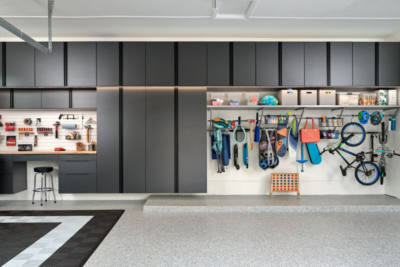
The single biggest shift in garage design for 2026 is a move away from piling things on the floor and toward using walls and ceilings to do most of the work. Homeowners are going vertical with wall-mounted systems that keep items visible and accessible while freeing up the floor for parking, a workbench, or even a home gym.
For daily-use items — tools, sports gear, garden equipment — wall systems are the way to go. Gladiator’s GearTrack and GearWall panels are the most recognized names in the category, with a wide accessory ecosystem and panels strong enough to carry real weight when anchored into studs. If you want a dedicated tool wall, Wall Control’s metal pegboard is a sturdier step up from standard hardboard pegboard. Rubbermaid’s FastTrack rail-and-bracket system is a solid middle-of-the-road option if you’re comparing prices.
For the seasonal stuff — holiday decorations, camping gear, off-season clothes — the ceiling is your best friend. Overhead storage systems like the FLEXIMOUNTS 4×8 rack are the value pick, rated for 600 pounds across 32 square feet, enough for 10 to 15 large bins. If you need something heavier-duty, ONRAX systems go up to 800 pounds. One safety note worth repeating from every source: always anchor into ceiling joists, never drywall alone, and never load past about 80% of the rated capacity.
The New Trend: Motorized Storage Lifts
If climbing a ladder to reach overhead bins sounds unappealing, there’s a genuinely new category worth knowing about: motorized platform lifts. Companies like SmarterHome and Garage Smart now sell push-button platforms that lower from the ceiling to waist height and back up again — no ladder required. SmarterHome’s lifters run from about $1,795 for a 4×4 platform up to $1,995 for a 4×8, both rated to lift 400 pounds. ONRAX’s motorized system is a similar option, and Ace Garage Storage carries several brands side by side if you want to compare. Higher-end models include soft-start motors, auto-stop obstruction sensors, and even smartphone app control — genuinely useful if you access overhead storage often or have any concern about ladders.
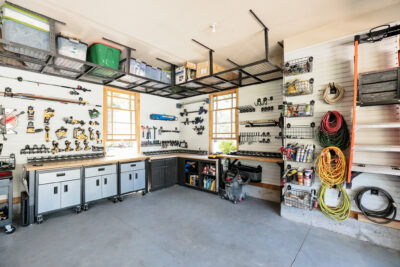 Quick, Cheap Wins You Can Do This Weekend
Not ready for a full system overhaul? You can make a real dent for under $200. Redfin’s guide to cheap garage organization and this roundup of quick, cheap organizing ideas both point to the same starting move: declutter before you organize. Sort everything into keep, sell, donate, and trash piles, and sell what you can on Facebook Marketplace before buying a single bin.
From there, the cheap wins stack up fast:
A basic pegboard wall — Family Handyman’s tips note this is one of the highest-value, lowest-cost upgrades you can make — runs $40 to $80 for a full sheet plus hooks, and it’s endlessly reconfigurable.
Kitchen-style magnetic strips, mounted on the wall, keep screwdrivers, wrenches, and drill bits visible and off the bench, a trick highlighted by The Krazy Coupon Lady’s budget garage guide.
Dollar-store clear bins with labels create an instant sense of order — HGTV’s storage ideas and this list of DIY storage hacks both call out labeled, uniform bins as one of the fastest ways to make a garage look put-together.
Heavy-duty wall hooks get bikes and ladders off the floor in minutes, and free wood pallets — easy to find on Craigslist or Marketplace — make surprisingly good holders for rakes, shovels, and other long-handled tools, per Safeguard Self Storage’s budget-friendly tips.
Finally, define zones. Tape off or paint sections of the floor for parking, bikes, yard tools, and bin storage. Extra Space Storage’s organizing guide and several 2026 trend reports agree that dedicated zones for automotive, gardening, sports, and seasonal gear are what separate a genuinely organized garage from one that just has more shelves.
Cabinets: For When You Want It to Look Finished
If bins and pegboard aren’t your aesthetic, closed cabinetry is the next tier up. NewAge’s Bold 3.0 Series is consistently ranked the best overall system for 2026 — 24-gauge steel, a lifetime warranty, and a clean, finished look for around $1,900. For a fully custom build, companies like Closet Factory and Closets by Design design cabinetry around exactly what you store, using 18-gauge steel and heavy-duty ball-bearing drawer slides. If you want something between DIY and full custom, RTA Cabinet Store sells ready-to-assemble garage cabinets at a friendlier price point, and Home Depot offers full design-to-installation service if you’d rather not shop around piece by piece.
Going Bigger: Construction and Renovation-Level Options
If you’re already building or renovating, it’s worth thinking about storage as part of the structure rather than an add-on. Dakota Storage Buildings points out that adding a 2- to 4-foot-deep storage loft — or up to 8 feet in larger buildings — is a much cheaper way to gain storage than building a bigger garage outright. Garage Experts has also seen a rise in full garage conversions that build out a workshop bench, a gym corner, and a storage wall as one coordinated project rather than bolting on organizers after the fact.
Flooring plays a bigger role in storage than people expect, too — the right floor determines how much weight your space can actually support. Flooring Inc.’s comparison guide and this epoxy-vs-tile-vs-coatings breakdown lay out the three main contenders: two-part epoxy, which is durable and inexpensive but takes three to seven days to cure and can yellow under UV light; polyaspartic or polyurea coatings, which cure faster and hold up better to hot tires and sun exposure but cost more and are best left to professionals; and interlocking polypropylene or PVC tiles, which install in a day with no adhesive or cure time and support the heavy static loads of cabinetry and SUVs. Garage Living’s 2026 flooring guidenotes a growing trend of mixing tile types — vented tiles in the parking zone, solid tiles under a workbench or gym — to zone the space visually as well as functionally.
Putting It All Together
You don’t need to do all of this at once, and honestly, most sources agree the order matters less than actually starting. A reasonable sequence: declutter and sell what you don’t use, tape off zones on the floor, put up a pegboard or slatwall for daily tools, add overhead racks (or a motorized lift if the budget allows) for seasonal bins, and save cabinets and flooring upgrades for whenever the budget and motivation line up. As The Coolist’s 2026 roundup puts it, the goal isn’t just to store more — it’s to make the space easier to actually use.
Sources referenced throughout: Verold, Inventive Garage, Six Storeys, Deal Sucker, The Garage Guide, Homedit, H2H Organizing, Inno-360, Harcrest Homes, Best In Show Garage, The Tool Scout, FloorHack, and Flooring Explorer.