


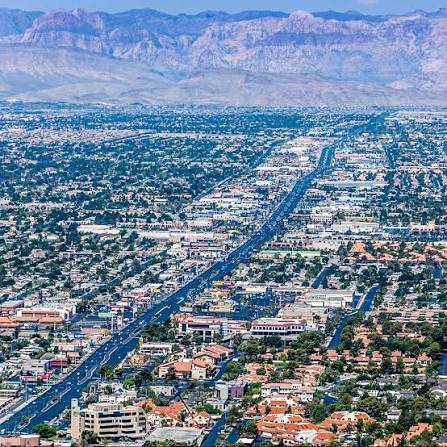
Las Vegas keeps drawing rental property buyers who don’t live anywhere near the valley. Between a low tax burden, steady population growth, and rental demand that has kept pace with it, the appeal is easy to see. But buying and holding a rental property from hundreds or thousands of miles away follows a different playbook than buying a home to live in. Here’s what out-of-state investors should know before making an offer on a Las Vegas or Henderson rental property.
 Why Investors Are Looking at Las Vegas
Nevada has no state income tax, so rental income isn’t taxed a second time at the state level the way it can be elsewhere. Property taxes are also low by national standards — Nevada’s effective property tax rate averages about 0.60% of assessed value, and rental properties are capped at up to an 8% annual increase under the state’s tax abatement law, among the lowest in the country. Paired with a growing population and rental demand that has kept up with it, that tax picture is a big part of why so many buyers are looking at Las Vegas from out of state.
Know the Numbers Before You Buy
Returns vary quite a bit by neighborhood and property type, and cap rates and price trends shift monthly, so it’s worth checking Las Vegas REALTORS’ housing market statistics for current numbers before setting expectations. As a general pattern, North Las Vegas neighborhoods like Aliante tend to offer higher cash flow for investors willing to manage more turnover, while Henderson communities such as Cadence, Anthem, Lake Las Vegas, and Inspirada, along with Summerlin, tend to appreciate more steadily and attract longer-term tenants. Which one fits depends on whether the goal is cash flow or appreciation — worth a real conversation with an agent who tracks both sides of the market.
Nevada’s Landlord-Tenant Rules
Nevada’s landlord-tenant law is governed by NRS Chapter 118A, and it’s worth knowing the basics before closing. Landlords must give at least 24 hours’ notice before entering a unit except in an emergency, late fees can’t exceed 5% of the overdue rent, and monthly tenants are owed 30 days’ notice to end a tenancy. Clark County’s Law Library also keeps a plain-language landlord-tenant reference worth bookmarking. None of this is unusual compared to other states, but missing a step in the notice or eviction process can get a case dismissed — one more reason out-of-state owners lean on local property management rather than handling it themselves from afar.
Short-Term Rentals Are a Harder Road Right Now
If the plan is a short-term or vacation rental, know that Clark County’s short-term rental licensing rules have been in legal flux — the county’s enforcement has faced court challenges even as commissioners keep tightening the ordinance, most recently with new licensing-verification requirements placed on booking platforms in August 2026. For most out-of-state investors, a long-term rental is currently the more predictable path. This is a fast-moving area, so it’s worth checking the current status with a local team before committing to a short-term rental strategy.
Financing and Closing From a Distance
Most out-of-state investors finance with a DSCR loan — a loan qualified against the property’s projected rental income rather than the buyer’s personal income — typically requiring 20–25% down and a credit score of 620 or higher. Remote online notarization and digital closing documents are standard practice in Nevada now too, so an out-of-state buyer can close on a Las Vegas rental property without ever booking a flight.
Don’t Overlook the Casita Opportunity
Nevada’s new statewide casita law, Assembly Bill 396, requires Las Vegas and Clark County to allow accessory dwelling units on residential lots, up to 1,200 square feet, and specifically protects a homeowner’s right to rent that unit out. For an investor, that means a single-family purchase can potentially carry two rental incomes instead of one — worth asking about on any property under consideration.
New Construction Rentals Come With a Catch
Some investors prefer new construction for a rental property, since it usually means fewer near-term repairs. Out-of-state buyers are actually a specialty of our new home specialist, who has built his practice around exactly this scenario. Between today’s technology and his own experience working with builders both directly and indirectly, he handles detailed video tours in place of an in-person walkthrough and routes contracts and disclosures through DocuSign, so an out-of-state investor rarely needs to be on-site to move a purchase forward. He also knows from experience that an out-of-state buyer’s biggest source of stress with a new build is not being able to see what’s happening at the site, so he makes a point of visiting the construction site consistently, in person, to check progress and settle any concerns as they come up rather than after the fact.
There’s one rule worth knowing well before ever stepping onto a builder’s lot, even virtually: buyers must bring their Premier Homes Real Estate agent with them on the very first visit to a builder’s sales office or model home. New home builders will not recognize an agent added after that first visit, so representation has to be locked in from the very start of the tour, not just before signing a contract.
Why Local Property Management Matters More From a Distance
Every rule above is manageable — but far easier to manage with someone local handling the day-to-day: entry notices, maintenance calls, rent collection, tenant placement, and eviction procedures if it ever comes to that. Closing the distance between an owner and a property is exactly what Premier Homes Property Management is built to do for investors who don’t live in the valley.
Buying a rental property from out of state doesn’t have to mean flying blind. Between financing at a distance, reading Nevada’s landlord rules correctly, and picking the right neighborhood for the strategy, there’s a lot to get right before the first tenant ever moves in.
This is the same guidance our team walks every out-of-state investor through — not just something we’re writing about — and we’re glad to help whether you’re actively shopping for a Las Vegas or Henderson rental property or just starting to think about it. Reach out to Premier Homes Real Estate to find the right property, or Premier Homes Property Management to have it managed once you own it.