


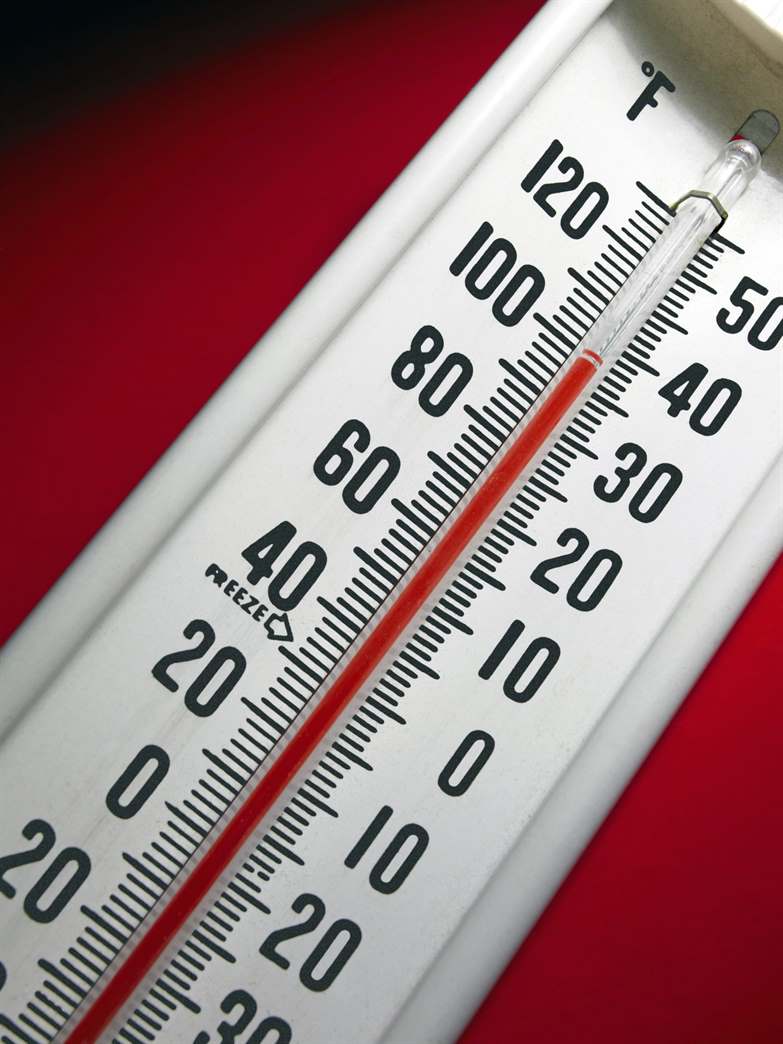
If you live in the desert, you already know the house doesn’t heat evenly. Central air keeps the whole place at a reasonable temperature on paper, but there are always a few rooms that never quite feel right — the west-facing bedroom that turns into an oven by 4 p.m., or the garage you’ve turned into a gym or workshop that your central system was never designed to touch in the first place. This is exactly the gap a ductless mini-split is built to fill, and it’s worth understanding what it actually fixes, what it doesn’t, and whether pairing it with solar makes sense before you commit.
The bedroom that bakes all summer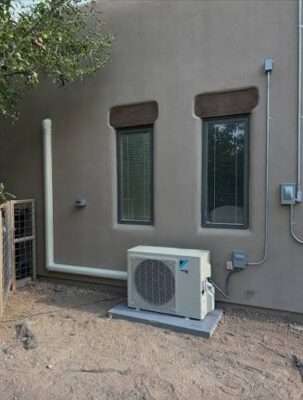
In most desert homes, heat gain isn’t evenly distributed. A bedroom with a west-facing window absorbs direct sun for hours in the late afternoon and evening, right when the rest of the house is trying to cool down for the night. Central air handles this by running longer and harder, which cools the whole house to compensate for one hot room — that’s expensive, and it still may not get that specific bedroom comfortable without overcooling everywhere else.
A mini-split solves this by treating that room as its own zone. You set it to whatever temperature makes the room comfortable, independent of the rest of the house, and it only runs when and where it’s needed. For a room that’s consistently the problem child of your cooling system, this is usually the single best fix — better than upsizing your central system, and far cheaper than trying to re-insulate or re-window the whole house to solve one room’s problem.
The garage that’s now a gym or workshop
This is the other classic case, and it’s a different problem than the bedroom. Garages typically aren’t on the central system’s ductwork at all — they were built to store cars, not to be occupied space. Once you turn one into a home gym, a workshop, or a studio, you’re asking a room with little to no insulation, a large uninsulated door, and zero conditioning to somehow be usable in July.
Extending your central ductwork out to the garage is usually impractical (the garage is often on a different air path, structurally separated, or too far from the air handler) and even if you can do it, feeding a barely-insulated space off your main system means your central unit works harder to condition a room that leaks heat constantly. A dedicated mini-split solves this cleanly: one outdoor condenser, one indoor head in the garage, sized for that specific space. You get a room you can actually use in August without your whole HVAC system paying the tax for it.
Does a mini-split solve “all” the problems with a desert home?
It solves a specific category of problem very well — uneven heat gain and unconditioned rooms — but it’s not a cure-all, and it’s worth being honest about that before you spend the money.
What it fixes: hot spots from sun exposure, rooms with no ductwork, garages and additions, and the general inefficiency of cooling an entire house to fix one room’s problem.
What it doesn’t fix: poor insulation, single-pane windows, attic heat gain, or an aging central system that’s already struggling elsewhere in the house. If your west-facing bedroom bakes because there’s no attic insulation above it, a mini-split will still cool the room, but it’ll be working overtime against a building envelope problem that a mini-split alone can’t solve. In some cases, air sealing, attic insulation, or better window film gets you more comfort per dollar than adding equipment — and doing both together is often the real answer, not one or the other.
 The negatives worth knowing about
A few tradeoffs are worth weighing honestly:
Upfront cost. A single-zone mini-split typically runs a few thousand dollars installed, and multi-zone systems (multiple indoor heads off one outdoor unit) cost more per zone than you might expect. It’s not the cheapest way to cool a single room, just the most effective one for a room central air can’t reach well.
Visible equipment. Unless you go with a ducted concealed unit or a ceiling cassette (both more expensive), you’re looking at a wall-mounted indoor head, which some homeowners find aesthetically intrusive. It’s a real design tradeoff, not just a minor detail.
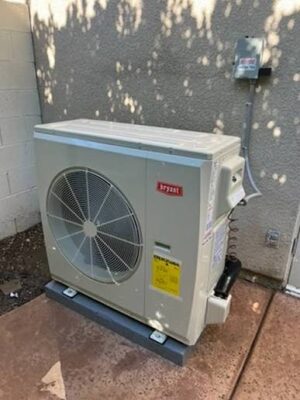
Maintenance is now split across two systems. You’ve added a second piece of HVAC equipment with its own filters, refrigerant, and eventual service needs — one more thing to maintain, and one more outdoor condenser taking up space and adding noise outside.
Outdoor unit placement in desert heat. Mini-split condensers work harder in extreme ambient heat, same as any AC condenser, so placement (shade, airflow, distance from reflective surfaces like stucco or gravel) actually matters for efficiency and unit longevity in a way it might not in a milder climate.
It adds electrical load, not removes it. A mini-split is efficient, but it’s still new electrical demand on top of whatever your central system already draws. It doesn’t replace your existing cooling costs — it adds a new cooling zone with its own draw, ideally while letting your central system work less overall.
Should you add solar at the same time?
This is a good instinct, but the financial case has shifted, so it’s worth understanding where things actually stand before assuming it’s a straightforward pairing.
As of 2026, the 30% federal residential solar tax credit (the one homeowners have relied on for over a decade) ended for systems purchased and owned outright — it applied only through systems placed in service by December 31, 2025, under the One Big Beautiful Bill Act. If you buy and own a home solar system now, you’re not getting that federal credit anymore. Third-party-owned arrangements like solar leases or power purchase agreements (PPAs) may still route through a different, commercial-side credit that the leasing company claims rather than you, so if solar is still financially attractive to you, that structure is worth asking a solar installer about directly — but the economics are meaningfully different than they were even a year ago. State-level incentives, utility net metering programs, and local rebates still vary a lot by state, so what’s true in Arizona or Nevada may not match Texas or California, and it’s worth checking what your specific state and utility currently offer before assuming solar pays for itself the way it used to.
Practically speaking, adding a mini-split and adding solar don’t need to happen at the same time, and there’s a reasonable case for sequencing them. Get the mini-split installed, run it for a season, and look at the actual increase on your electric bill — that gives you real numbers instead of estimates when you sit down to size a solar system. If you install solar first based on guesswork about future loads, you risk undersizing or oversizing the system for what you actually end up using. Doing it in that order also means you’re financing one thing at a time instead of stacking two large expenses into a single decision, especially now that the tax credit isn’t there to offset the solar side.
The bottom line
A mini-split is genuinely one of the best fixes for the specific problem of “one room won’t cool no matter what I do,” whether that’s a sun-baked bedroom or a garage that’s become a second living space. It’s not a fix for a poorly insulated house, and it does add real electrical load rather than eliminating it. Solar can help offset that load, but the federal incentive picture changed in 2026, so it’s worth running the numbers with current information rather than assuming the math that used to work still does — and there’s a solid argument for getting the mini-split’s real energy impact on paper before deciding how big a solar system you’d actually need.
Sources on the 2026 federal solar tax credit changes:
- The Federal Solar Tax Credit: What’s New in 2026 (SolarReviews)
- The Federal Solar Tax Credit is changing: What homeowners need to know before 2026 (Enphase)
- Solar Tax Credit 2026: How Homeowners Still Get 30% via Lease/PPA + State (NuWatt)
- Has the Federal Solar Tax Credit Expired? 2026 ITC Status Update (SwapToSolar)