


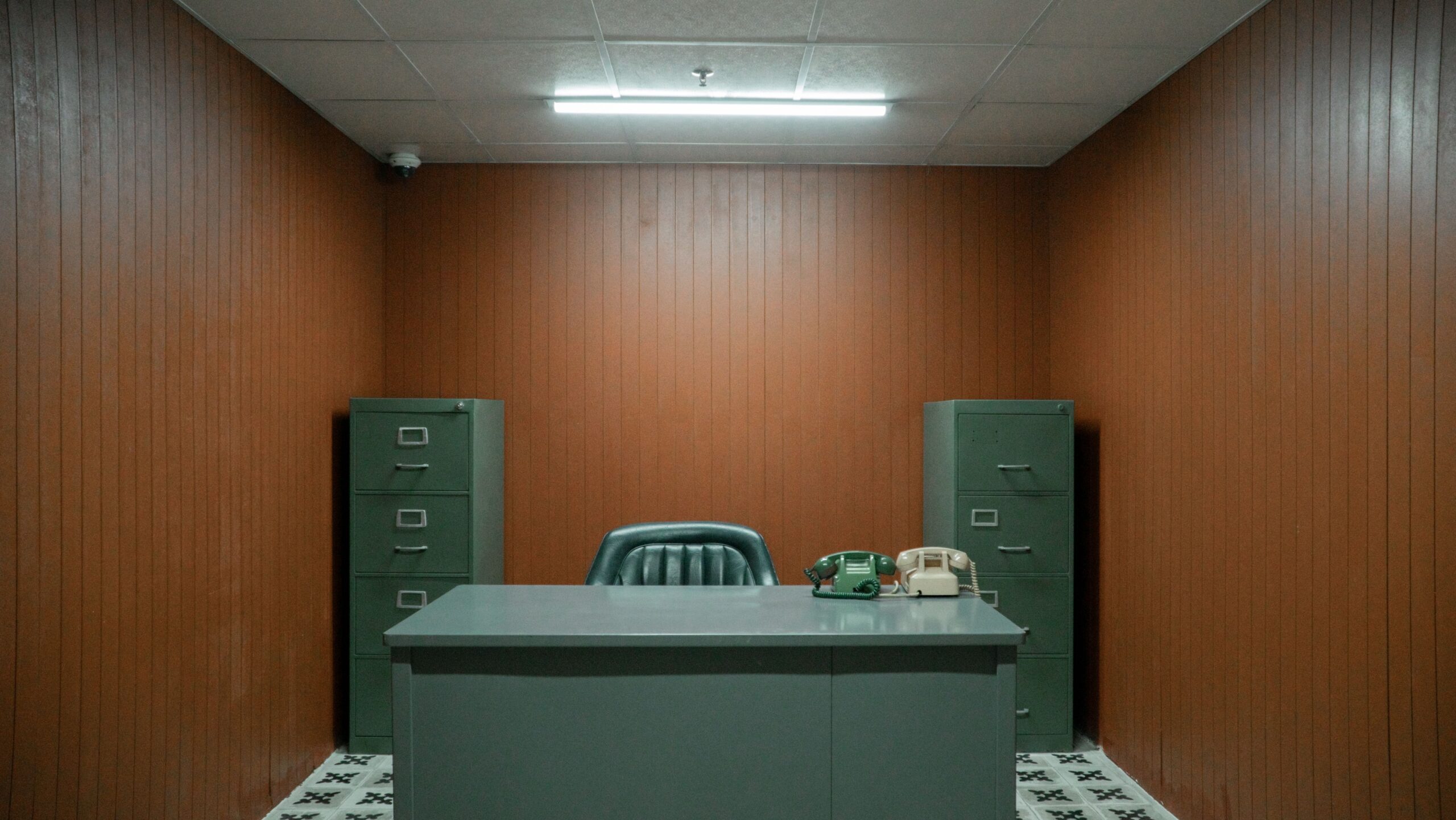
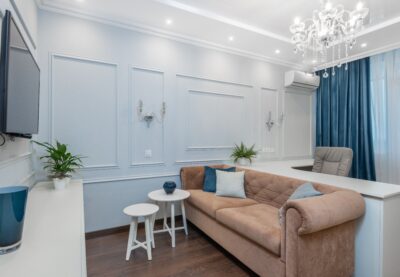
 There was a time when a home office meant a desk shoved into a spare corner, a filing cabinet nobody opened, and a chair that was really meant for the dining table. That era is quietly ending. As more of us split our working lives between company offices, coffee shops, and our own four walls, the home office has become something worth designing on purpose — a space that has to do real work (focus, calls, deep thinking) while also feeling like part of a home we actually want to live in.
If you’re planning your own space, or just love thinking about what makes a room work, here’s where to start, what’s new in 2026, how different design cultures approach the problem, and why your next officemate might be an AI that listens.
Start With the Fundamentals
Before trends and tech, a good home office rests on a handful of unglamorous basics. Natural light matters more than almost anything else — where the desk sits relative to a window changes how a room feels by mid-afternoon, and it changes how you look on video calls too. Ergonomics is next: a chair that actually supports you, a monitor at eye height, a keyboard that doesn’t force your wrists into a shrug. Acoustics are easy to overlook until a call goes badly — a rug, a bookshelf, even heavy curtains can quiet a hard-surfaced room. And then there’s the quieter discipline of storage and cable management, because visual clutter has a way of becoming mental clutter.
Once those fundamentals are settled, the real fun begins: deciding what kind of office you actually want to live inside.
What’s New in 2026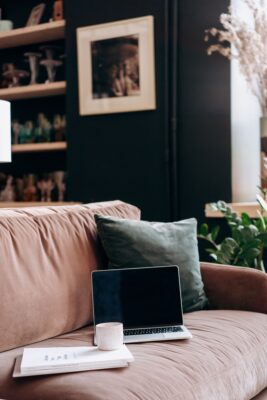
Home office design right now is being shaped by two forces pulling in the same direction: technology that wants to disappear, and materials that want to feel real again.
On the material side, designers are moving away from polished, uniform surfaces toward what’s being called tactile naturalism — solid wood, unfinished mineral composites, surfaces where you can see the maker’s hand. Color palettes are splitting into two camps: deep, anchoring tones like plum-brown for spaces that want gravity, and desaturated pastels like sage and powder blue for spaces built around sustained focus, chosen specifically because they don’t compete with your attention the way a bright accent wall would.
On the technology side, the goal has flipped from showing off gadgets to hiding them. Wireless charging is being built directly into desk surfaces, outlets are recessed into furniture, and task lighting tucks itself out of sight until you need it. Some desks and chairs now carry posture sensors that make small automatic adjustments before you’d even notice you were slouching — ergonomics handled algorithmically rather than through willpower.
Maybe the most interesting shift is spatial: offices are stopping being one room. Instead, work is distributing itself across the house in what’s being called multizonal design — a console table in a hallway that becomes a stand-up workspace for an hour, a window bay with a single chair for reading and thinking, a corner that’s only ever “the office” between nine and noon. And increasingly, wellness isn’t an afterthought bolted onto the room afterward — it’s built in from the start, with movement equipment, a small meditation nook, or air-purifying plants treated as core furnishings rather than extras.
What Different Design Cultures Teach Us
One of the most useful things about looking at home office design globally is realizing there isn’t one “correct” way to build a focused space — there are several coherent philosophies, each solving for something slightly different.
Japandi — the fusion of Japanese wabi-sabi and Scandinavian hygge — has become something of a shorthand for deep-work design. Wabi-sabi is about finding beauty in natural imperfection and editing rather than accumulating; hygge is about functional warmth, the kind of coziness that still lets you get things done. Together they produce offices with floating desks, warm low-temperature lighting, natural wood, and cables hidden with almost architectural discipline — the idea being that if a room is visually quiet, your mind has an easier time getting quiet too.
Feng shui takes a more energetic view of the same problem. It organizes a room around the “command position” — a desk placed so you can see the door without sitting directly in line with it — and treats decluttering not just as tidiness but as an active practice that keeps energy, and attention, moving freely through the space.
Lagom, the Scandinavian idea of “just the right amount,” pushes against both bare minimalism and maximalist decorating in favor of restraint — enough personality to feel like yours, not so much that it becomes noise.
It’s worth noting, too, that the very idea of a “home office” isn’t culturally universal. Some households treat it as strictly professional territory, sealed off from domestic life; others blend the two much more freely, letting work happen at the kitchen table or in a shared family room without much separation at all. Neither approach is more correct — they reflect genuinely different ideas about where work belongs in a life.
Can an Office Combine Tasks and Comfort? Absolutely — and It’s the Whole Point Now
The multifunctional office isn’t a compromise anymore; it’s arguably the dominant idea in home office design today. A desk can double as a console table when the workday ends. A guest bedroom can hide a fold-away desk that disappears the moment company arrives. Storage on casters lets a room flip from office to bedroom in the time it takes to roll a box aga
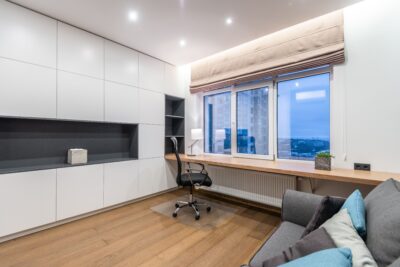
inst the wall. Built-ins under a staircase or inside a closet can hold an entire workspace that vanishes behind a door.
The mindset shift is this: comfort used to be treated as a nice-to-have layered on top of a “real” workspace. Now it’s treated as an input to productivity itself. Better light, better seating, a calmer palette, a plant, a place
to stretch — these aren’t rewards for finishing work, they’re part of what makes good work possible in the first place. An office that also functions as a reading nook, a quiet spot to decompress, or a guest room isn’t diluting its purpose. It’s acknowledging that the room, like the person using it, has more than one job.
The Listening Office: AI That Speaks, Reminds, and Remembers
Here’s where the home office gets genuinely new. Alongside the physical redesign of these spaces, a layer of voice-driven AI is emerging that can talk to you, remind you of tasks, and — increasingly — just listen while you think out loud and catch the ideas you’d otherwise lose.
The mainstream voice assistants have all leaned into this. Amazon’s Alexa+ now supports natural, back-and-forth conversation and remembers your preferences over time, making it genuinely useful for voice-based task capture rather than just timer-setting. Apple’s Siri and Google Assistant both handle spoken reminders, calendar events, and shortcuts across phones, watches, and smart speakers, so an idea you say out loud at your desk can land directly on tomorrow’s to-do list. Microsoft Copilot brings a similar capability into work tools like Outlook and Teams, useful if your home office doubles as your actual job.
Beyond the built-in assistants, a newer category of wearable AI is aimed almost entirely at this problem: capturing spoken thoughts before they evaporate. Devices like the Plaud NotePin use a press-to-record model and produce notably accurate transcripts and summaries — a deliberate, intentional way to capture a thought without an always-on microphone. Bee, on the budget end, offers always-listening ambient capture at a low price point, though it’s worth knowing it’s now an Amazon product, which raises the same privacy questions people ask about any always-on device in the home. Omi takes an open-source approach, letting people build their own plugins around what the device captures.
It’s a genuinely fast-moving space — worth mentioning that the Limitless Pendant, one of the earlier and better-known entries in this category, was acquired and discontinued in the time it takes to write about it, a reminder that this corner of home office tech is still very much being figured out in real time. If you’re designing a space around one of these tools, it’s worth choosing based on how deliberate you want the listening to be, and being honest with yourself about the trade-off between convenience and always-on ambient recording in your own home.
Bringing It All Together
The perfect home office in 2026 isn’t a single look you can copy from a catalog. It’s a set of decisions: how much light you can borrow from the day, which design philosophy actually matches how your mind works, whether the room needs to be exclusively yours or comfortable sharing its space with the rest of your life, and how much you want technology to actively participate in how you think and remember. Design the room around those questions honestly, and the aesthetics tend to follow.