


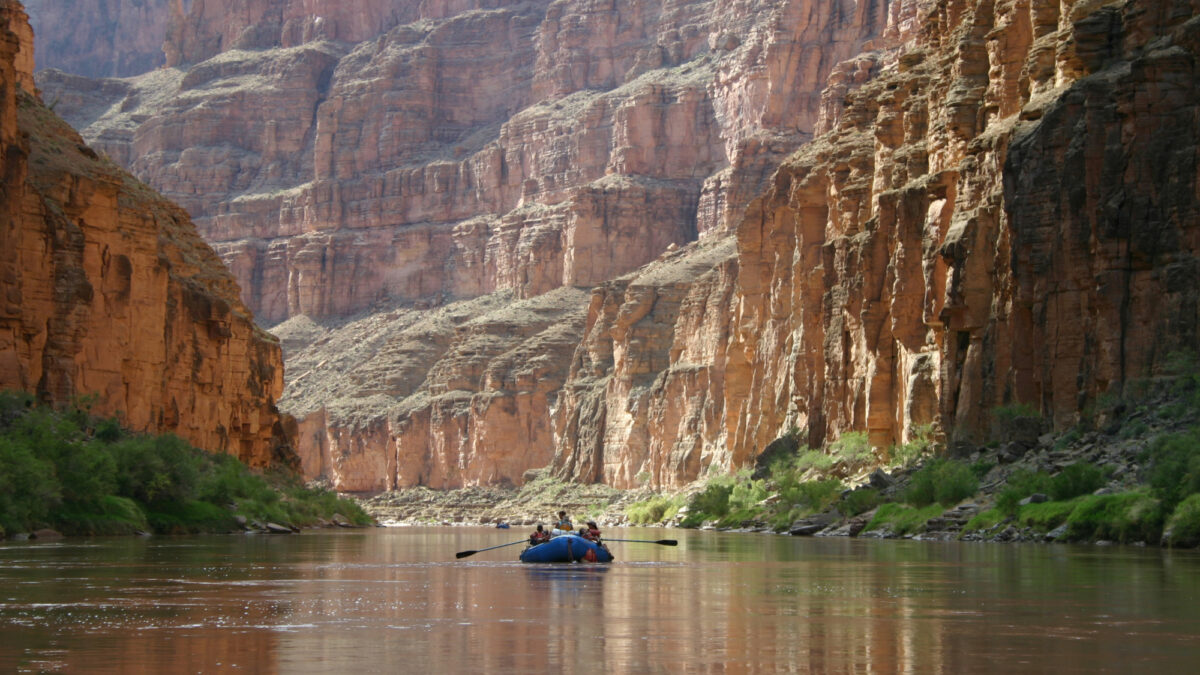
If you’ve followed the news this summer, you’ve seen the headlines: Lake Mead hit its lowest water level on record on August 7, 2026, and the federal government is preparing to hand Nevada, Arizona, and California some of the steepest Colorado River cuts in the river’s history. For Las Vegas and Henderson homeowners, that’s not just a headline — it’s a reason more property owners are asking about rain barrels, cisterns, and graywater systems. Here’s where the water fight stands, and what’s actually legal to do on your own property.
The Water Battle, Briefly
The Colorado River is carved up by a 1922 Compact that promised 7.5 million acre-feet a year to each of two basins — the Lower Basin (Nevada, Arizona, California) and the Upper Basin (Colorado, Utah, Wyoming, New Mexico). That deal assumed the river could reliably deliver 15 million acre-feet a year. Today it delivers closer to 12.4 million, and two decades of drought and climate change have cut its flow by roughly 20%.
On July 31, 2026, the Bureau of Reclamation released its Final Environmental Impact Statement for how the river will be managed after the current guidelines expire. The plan could require Lower Basin states to contribute up to 3.6 million acre-feet a year to keep reservoirs like Lake Mead from collapsing further — with Nevada’s own allocation, already the smallest of any of the seven river states, potentially cut by anywhere from one-sixth to as much as two-thirds over the next decade, depending on how the final terms shake out. Upper Basin states, by contrast, would only be asked to contribute 200,000 acre-feet a year between all four of them, and only voluntarily. Nevada and Arizona have called that split disproportionate, and John Entsminger, general manager of the Southern Nevada Water Authority and the state’s lead negotiator, has said Nevada will defend its water rights in court if negotiations break down. The Colorado River supplies about 90% of the water used by roughly three-quarters of Nevada’s population, so however this settles, it touches nearly every household in the valley.
Whether the final deal lands through negotiation or litigation, the direction is clear: less river water is coming to Southern Nevada, and conservation at the household and property level matters more than it used to.
 The Good News: Rainwater Collection Is Legal in Nevada
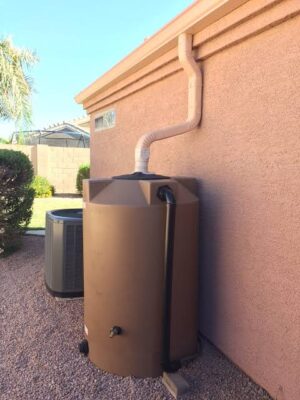
Nevada actually banned catching rainwater until 2017. Assembly Bill 138 changed that by amending state water law to allow “de minimis collection of precipitation” from the rooftop of a single-family dwelling, without needing a water-right permit. You can direct roof runoff into barrels, totes, or a cistern and use it for nonpotable domestic purposes — irrigation, watering a garden, washing a car, evaporative cooling. You just can’t drink it.
Tank Size and the Rules That Come With It
Here’s the catch: Nevada law never spells out an exact gallon limit for rooftop rainwater collection — it just has to stay “de minimis,” meaning modest, incidental collection rather than a substitute water supply. A rain barrel or a couple of IBC totes off your gutters is squarely inside that exemption. A bank of large cisterns sized to meaningfully offset your household water use is a grayer area, and could invite a closer look from the State Engineer if it appears to compete with existing water rights. Separately, larger tanks may also trigger Clark County building and fire code requirements around structural support, setbacks, and fire clearance, regardless of the water-rights question. If you’re thinking bigger than a backyard rain barrel, it’s worth confirming your plans with the Nevada Division of Water Resources and Clark County’s building department before you build.
What About Graywater?
Graywater — the runoff from showers, bathroom sinks, and laundry (not toilets or kitchen sinks) — is also legal to reuse in Nevada, but it’s handled very differently from rainwater. Under Nevada Administrative Code 444.837, graywater may only be used for underground/subsurface irrigation, and you need a permit to construct or install the system before you use it. Just as important: graywater can’t be stored in above-ground tanks for later use the way rainwater can. It has to be routed to subsurface irrigation, generally the same day it’s generated. In Clark County, graywater systems are permitted through the Southern Nevada Health District, which also oversees septic and sewage disposal systems.
This Isn’t Legal Advice
This post is meant to give Las Vegas and Henderson property owners a starting point, not a substitute for professional guidance. Water law is fact-specific, and the rules can shift as the Colorado River negotiations play out. Before you install a large rainwater tank or a graywater system, or if you have questions about how any of this affects your property, talk to the right people.
Who to Contact
Nevada Division of Water Resources / State Engineer — for questions on water rights and whether a rainwater collection plan stays within the “de minimis” exemption: Nevada Division of Water Resources – water.nv.gov
Southern Nevada Water Authority (SNWA) — for updates on the Colorado River negotiations and local conservation programs: Southern Nevada Water Authority – snwa.com
Southern Nevada Health District — for graywater and septic/sewage disposal system permits in Clark County: Southern Nevada Health District – ISDS & Graywater Permits
Clark County Building & Fire Prevention — for permit requirements on larger storage tanks or cisterns: Clark County Building & Fire Prevention – Main Office
State Bar of Nevada Lawyer Referral Service — for a free or low-cost initial consultation with a water-rights attorney: State Bar of Nevada – Lawyer Referral Service
What This Means If You’re Buying, Selling, or Holding Property Here
As Colorado River allocations tighten, water-conscious features — rain barrels, xeriscaping, efficient irrigation — are becoming more than an environmental talking point; they’re a practical selling point in a market that’s going to keep feeling this pressure. Whether you’re weighing upgrades before listing, evaluating a property’s water setup before you buy, or just want a property manager keeping an eye on compliance, it helps to have a team that’s paying attention to this.
Have questions about buying, selling, or managing a property in Las Vegas or Henderson with these water rules in mind? Contact Premier Homes Real Estate or Premier Homes Property Management today — we’re happy to help.