


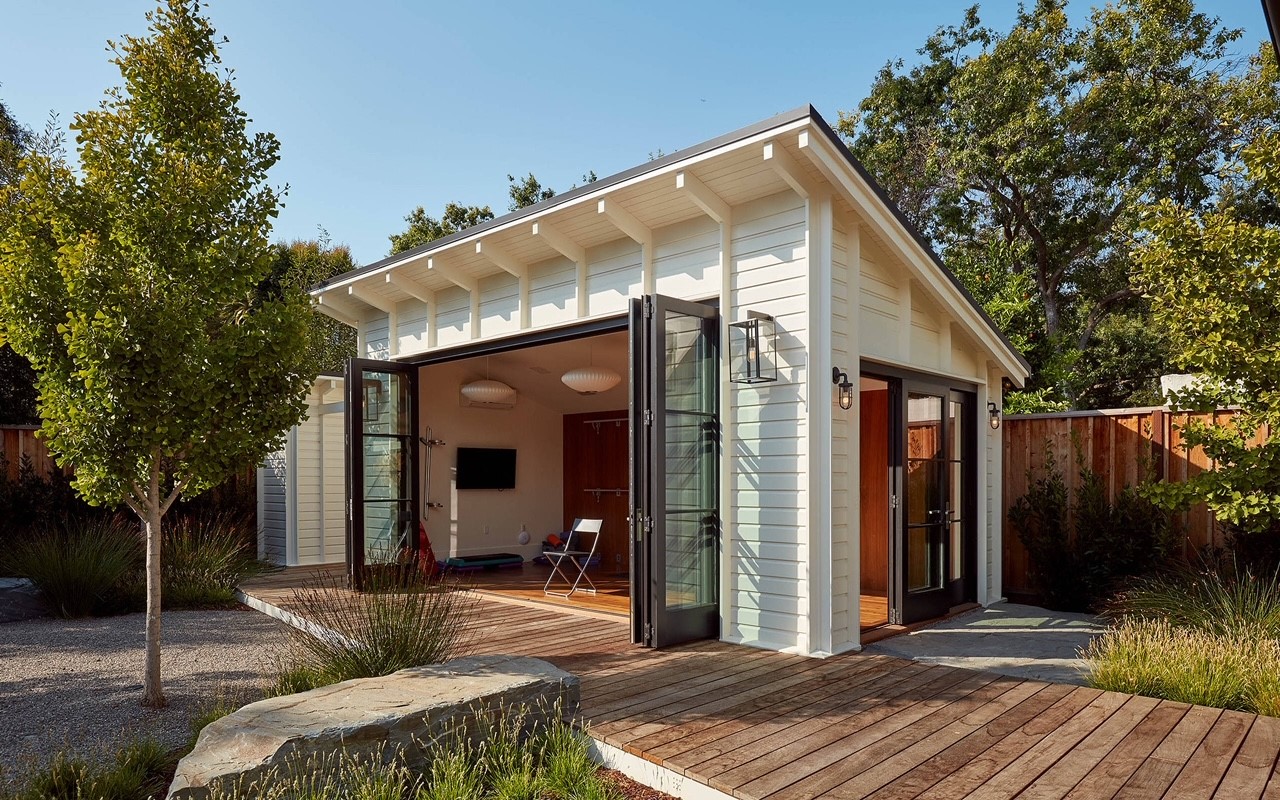
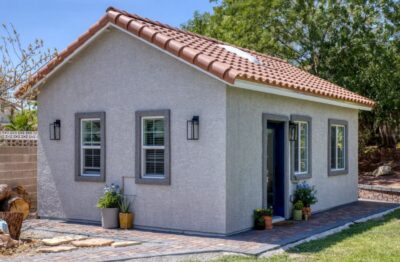
 For years, adding a rentable casita to a Las Vegas or Henderson investment property meant a discretionary hearing, a large lot-size minimum, and no guarantee of approval at the end of it. That changed with Assembly Bill 396, Nevada’s new statewide “casita law,” which forced cities and counties across the state to open the door to accessory dwelling units. For an investment property owner, that’s a second rental income stream sitting in the backyard of a property they may already own. Here’s what the law actually requires, what’s changed locally, and where a popular local prefab option — Boxabl — fits in.
What AB 396 Actually Requires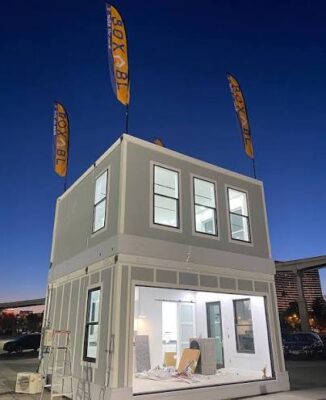
Assembly Bill 396 requires every county with 100,000 or more residents (Clark and Washoe) and every city with 60,000 or more residents (Las Vegas, Henderson, North Las Vegas, Reno, and Sparks) to adopt an ordinance allowing accessory dwelling units on residential lots. The law sets a floor, not a ceiling, on how restrictive those local ordinances can be: they cannot ban a separate kitchen in the ADU, cannot require more than one extra parking space if existing parking already covers the need, cannot impose a side or rear setback on the ADU stricter than what applies to the primary home, and — with a narrow exception for short-term or transient rentals — cannot stop the owner from renting the unit out. Jurisdictions that missed the July 1, 2026 deadline lose the ability to restrict ADUs on residential parcels at all.
Setbacks: What Changed by City
Las Vegas adopted Bill No. 2026-24 (Ordinance No. 6963) on July 1, 2026, setting a 3-foot minimum setback for a detached casita with 6 feet of separation from the main house, and no setback at all where the lot backs up to an alley. Henderson’s rules, under its Development Code (Section 19.9.4.B.6), set a 5-foot setback for casitas 14 feet or shorter, while taller units have to meet the same rear setback required of the primary home — 25 feet in RS-1/RS-2 zoning, 15 feet in RS-4/RS-6/RS-8. In both cities, the fully codified text is still catching up to the new ordinances in places, so it’s worth confirming exact numbers with Las Vegas Planning & Zoning or Henderson’s Development Services Center before finalizing a design.
Does the Casita Have to Match the House?
Not according to AB 396 itself — the state law is entirely silent on exterior materials, rooflines, or color, and neither Las Vegas’s nor Henderson’s base zoning ordinance appears to impose a blanket matching requirement either. Where it does show up is inside HOA-governed communities: AB 396 did not touch homeowner association authority, so a recorded HOA declaration can still require an Architectural Review Committee to sign off on a casita’s exterior materials, roofline, and color palette, entirely independent of what the city allows. If the investment property sits inside a master-planned community, that committee is the review to check before ordering anything — not the state law.
 An “Instant Casita” Option: Boxabl
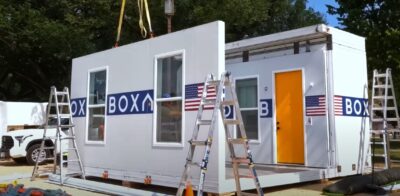
One local option worth knowing about is Boxabl, a manufacturer headquartered in North Las Vegas that builds a 361-square-foot prefabricated studio casita — full kitchen, one bathroom — that folds flat for shipping and unfolds on site rather than being framed board by board. Pricing generally starts in the mid-$50,000s to around $60,000 before delivery and site work, with all-in costs (foundation, utility connections, delivery) commonly landing somewhere between $70,000 and $100,000 depending on the site, and financing available from roughly $900 a month. At 361 square feet, a Boxabl casita comfortably clears the size limits both cities allow, and it’s exactly the kind of fast-to-install unit AB 396 was written to make easier to add. The one thing worth checking first: its exterior is a distinct, modern, boxy design — exactly the kind of detail an HOA architectural review committee may have an opinion about, worth confirming before signing a purchase agreement, for the reason above.
The Investment Case
For an investment property owner, a casita is the difference between one rental income and two off the same lot — the exact opportunity we walked through in our guide for out-of-state investors buying rental property in Las Vegas. Whether a specific property has the lot size, setback room, and zoning to make a casita work is worth checking before closing, not after, and once it’s built, filling and managing that second unit is its own job.
Nevada’s new casita law opened a real opportunity for property owners in Las Vegas and Henderson, but the details — setbacks, HOA review, and matching a unit to a specific lot — still take some checking before ground breaks.
This is the same guidance our team walks every investment property owner through — not just something we’re writing about — and we’re glad to help whether you already own a Las Vegas or Henderson rental property or are evaluating one with a casita in mind. Reach out to Premier Homes Real Estate to check whether a property qualifies, or Premier Homes Property Management to help manage the second unit once it’s built.