

Desert living in the Las Vegas Valley comes with its own set of house guests — ants, spiders, and the occasional scorpion — plus hard water that leaves its mark on every faucet. You don't need a cabinet full of harsh chemicals to handle either problem. A few pantry staples and the right plants can keep a valley home clean and pest-resistant, without anything you'd worry about around kids or pets. Citrus Peels and Vinegar for Ants Ants dislike the smell of citrus, so leaving orange or lemon peels near doorways, windowsills, and other entry points helps discourage them from coming in. For active trails, mix equal parts white vinegar and water in a spray bottle and spray directly on the ants and along baseboards, then wipe down — the scent also breaks the trail they leave for other ants to follow. Peppermint: Plant It or Spray It Peppermint oil is one of the more reliable natural deterrents for spiders and other crawling pests — mix 10 to 15 drops with a cup of water and spray around windows, door frames, and cracks where they tend to sneak in. Peppermint plants themselves do best in a shaded container near an entryway rather than out in full desert sun, since they need more consistent moisture than most xeriscape plants. A pot by the back door does double duty as a natural deterrent and a nice-smelling addition to the patio. Diatomaceous Earth for Scorpions Scorpions are the pest most valley homeowners worry about, and food-grade diatomaceous earth is the most effective, fully non-toxic option against them. Sprinkle a light layer along the foundation, baseboards, and any gaps around doors and windows — it's a fine powder that damages a scorpion's exterior on contact, and it's safe to use in homes with kids and pets. Citrus and vinegar are sometimes suggested for scorpions too, but neither has proven especially reliable, so lean on diatomaceous earth as the main line of defense. A Simple Vinegar and Baking Soda Cleaning Kit White vinegar, baking soda, and castile soap can replace most of what's under a typical sink. Vinegar cuts through grime and hard water spots, baking soda tackles grease and helps soften our famously hard tap water, and castile soap handles everyday surface cleaning. One rule worth remembering: never mix vinegar and castile soap in the same bottle — combined, they curdle and cancel each other out. Keep them separate, and use a vinegar rinse afterward on faucets and shower glass to cut through mineral buildup. None of these swaps take much effort, and they add up to a home that's easier on your family and the desert environment around it. Simple, natural upkeep like this is part of what keeps a Las Vegas Valley home comfortable year-round. Looking for a home in Las Vegas, Henderson, or the surrounding valley? Contact Premier Realty today — our team knows this valley, inside and out.
Read more
Mortgage rates just touched their highest levels in a year, and it's tempting to read that as a sign to wait. But look past the rate headline and the rest of the picture tells a different story. Inventory is loosening, sellers are negotiating again, and a new federal law is starting to chip away at one of buyers' biggest sources of competition. None of these conditions are guaranteed to last, which is exactly why they're worth paying attention to now. Inventory Is Finally Giving Buyers Room to Breathe Active listings across the Las Vegas Valley have climbed steadily over the past couple of months, giving buyers more homes to choose from and more time to make a decision than the frantic, multiple-offer environment of a few years ago. Closed sales have held fairly steady month to month, which tells us buyers are still out there; they just have more options than they used to. Sellers Are Negotiating Again Homes are sitting on the market longer than they were during the pandemic-era boom, and that shift in pace has made sellers more willing to talk. Repair credits, closing cost assistance, and price flexibility that would have been unthinkable in 2021 are back on the table in many parts of the valley. That negotiating room is one of the clearest signs that this is a buyer-friendly stretch, not just a slow one. Higher Rates Mean Less Competition, Not No Opportunity Rates sitting near a one-year high are keeping a lot of would-be buyers on the sidelines, which thins out the competition for the buyers who do move forward. A rate you lock in today isn't permanent; it can be refinanced down the road if rates ease. The negotiating leverage and inventory levels available right now, on the other hand, aren't something you can go back and capture later once more buyers re-enter the market. Remember sellers also include new home builders. They only make money when someone buys the home, which means they are willing to negotiate a mortgage rate buydown. A New Federal Law Is Starting to Reshape Buyer Competition The recently enacted 21st Century ROAD to Housing Act restricts large institutional investors from continuing to buy up single-family homes. It's a significant shift at the federal level, and over time, it should mean fewer bulk buyer competitors standing between everyday buyers and the homes they want. Policy changes like this tend to take a while to show up in day-to-day market data, which makes it worth watching closely as it phases in. The truth is, a 'perfect' time to buy rarely announces itself. Conditions like more inventory, more room to negotiate, and less investor competition tend to shift again once rates ease, and buyers flood back in. Our team meets regularly to compare notes across the valley, from Summerlin to Henderson to the newer master-planned communities on the edges of town, so our clients get the benefit of the whole team's read on the market, not just one agent's opinion. Ready to see what today's market conditions could mean for you? Contact Premier Realty today to start your home search in Las Vegas, Henderson, or the surrounding valley with a team that knows the market inside and out.
Read more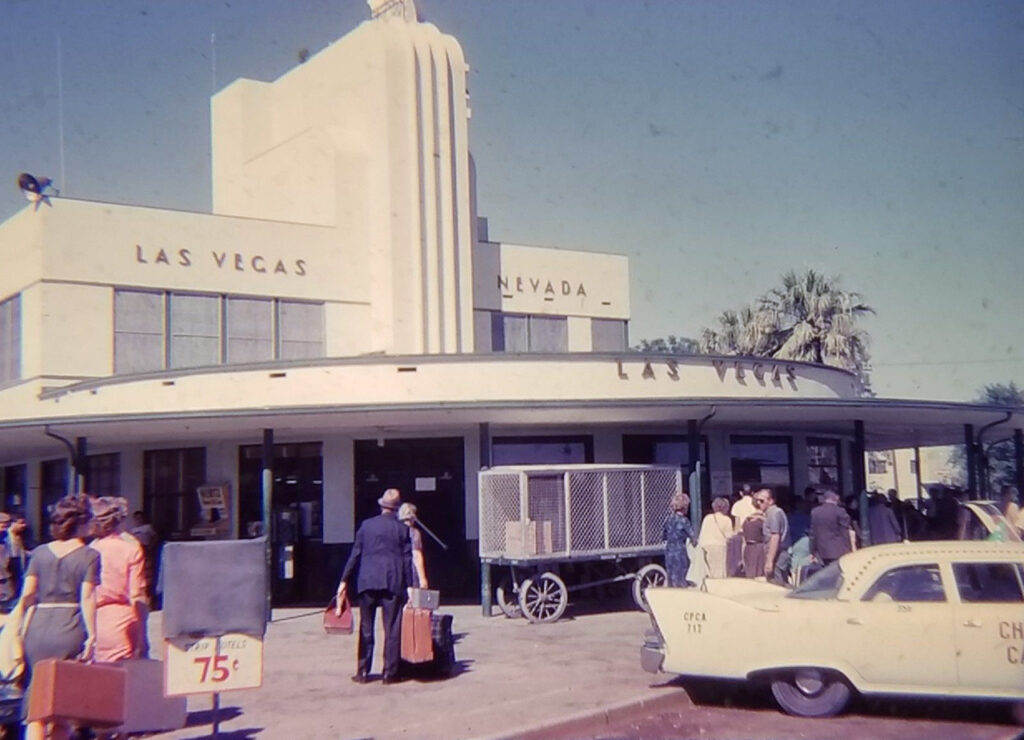
Picture this: you leave your house in Summerlin, grab a coffee, and a couple hours later you're stepping off a train in the middle of Southern California — no security line, no Cajon Pass gridlock, no white-knuckle drive through the desert on a Friday afternoon with 200,000 other people trying to do the same thing. That's the promise of Brightline West, and it's no longer a rendering on a website — it's steel, concrete, and cranes rising along I-15 right now. This isn't just an infrastructure story. It's a story about what Las Vegas is about to become. The Fastest Way From Here to There Is About to Get a Lot Faster Right now, the drive from Las Vegas to Los Angeles is a rite of passage — and not the good kind. Four-plus hours if you're lucky, double that if you're stuck behind an accident at the Cajon Pass on a holiday weekend. Brightline West collapses that entire ordeal into a fraction of the time, at speeds up to 186–200 miles per hour, running in a dedicated corridor down the median of I-15. Depending on the source and the exact stop pattern, quoted trip times range from as fast as 55 minutes for the shortest express segments up to a bit over two hours end to end — the point is, whatever the final number lands on, it's a different category of trip than the drive. The numbers behind it are staggering: a 218-mile line, a price tag that's climbed toward $21 billion, a $3 billion federal grant already banked, billions more in bonds issued, and dirt already moving at the future Las Vegas station site near the 215. The Las Vegas station's parking garage is visibly taking shape. This is the most real a Vegas-to-LA train has ever been. Is it running tomorrow? No — the latest target is late 2029, a delay from the original goal of beating the 2028 LA Olympics. But make no mistake: this thing is being built, and when it opens, it changes the map. For Comparison: How Fast Is "Fast," Really? If you want a gut check on what a two-hour-ish train ride actually buys you, look east. Amtrak's Acela — America's only other true high-speed service — runs New York to Washington, D.C. in about 2 hours 45 minutes, and New York to Boston in around 3 hours 30 minutes, even with the brand-new NextGen trainsets that just launched. Those routes are shorter than Vegas-to-SoCal in miles but slower in practice, because Acela shares aging track with freight and commuter rail and tops out around 160 mph. Brightline West, by contrast, gets a dedicated, purpose-built corridor down the I-15 median — no freight trains, no shared track, no legacy infrastructure slowing it down. If it delivers anywhere near its target speeds, it could end up being the fastest scheduled train in the country, coast to coast. What This Means If You Own a Home in Clark County If you own property in Las Vegas or anywhere in Clark County, pay attention — because history says rail lines like this move real estate. Right now, Clark County's median home price sits around $420,000–$460,000, already up nearly 40% since 2020. Brightline West is being cited by local market watchers as one of the next big structural growth drivers for the region — right alongside population growth and mega-development. Here's why that matters: a fast, reliable train ride doesn't just move tourists. It moves buyers. Suddenly, someone priced out of Los Angeles, Orange County, or the Inland Empire doesn't have to give up on Southern California living — they can own in Las Vegas and treat LA as a quick train ride away, not a life-altering relocation. That's a massive expansion of the buyer pool for Clark County, especially for property near the future station corridor in the southwest valley. Second homes, investment properties, and remote-flexible buyers from California could all pour into a market that's currently taking a breather. Homeowners near the line aren't just buying a house anymore — they're sitting on a future transit-oriented asset. Does This Make Vegas a Suburb of LA? Not Quite — But Close Enough to Matter Let's be clear: Las Vegas isn't becoming Pasadena. It has its own economy, its own identity, its own gravity — gaming, conventions, entertainment, and now, increasingly, film and tech. A fast train doesn't erase that. But it does something arguably more interesting: it stitches Las Vegas into the Southern California megaregion as a lower-cost, high-amenity satellite — something closer to what Philadelphia is to New York. Independent, but functionally connected. Close enough to commute for a meeting. Close enough to live in and work in LA a few days a week. Close enough that the two cities start to behave, economically, like one sprawling metro rather than two separate markets separated by a brutal drive. That's not becoming a suburb. That's becoming something new — and it could be the single biggest identity shift for Las Vegas since the Strip went corporate. Lights, Camera, Las Vegas: The Hollywood Connection Here's where it gets genuinely exciting. While Brightline West lays track, Hollywood is laying foundations of its own — in Summerlin. Sony Pictures and Warner Bros. Discovery have teamed up with Howard Hughes Holdings on Summerlin Studios: a planned 31-acre, roughly 500,000-square-foot production hub, pending Nevada legislation and tax incentives. People are already calling it "Hollywood 2.0." Now connect the dots. A full-scale studio complex in Las Vegas is only as good as its ability to move people and gear between Vegas and the beating heart of the entertainment industry in LA. A train ride short enough to fit inside a workday is exactly the threshold where a trip stops being "a flight with security and baggage claim" and starts being "a same-day commute." Directors, execs, actors, crews — able to hop a train from Burbank or downtown LA to a Vegas soundstage and back in a single day. That's not a minor convenience. That's the infrastructure that turns "Vegas has a studio" into "Vegas is a real extension of Hollywood." If this all lines up — the studio, the incentives, the train — Las Vegas doesn't just get a film industry. It gets a seat at the table with the entertainment capital of the world, sitting a quick ride down the tracks. Tourism Is About to Get a Rocket Boost Convenience is the single biggest lever in travel decisions, and Brightline West is about to pull it hard. Think about who currently doesn't make the trip to Vegas because of the drive: the Orange County family that doesn't want to spend a Saturday behind the wheel. The LA professional who'd love a spontaneous weekend but can't stomach four-plus hours each way. The convention-goer flying into LAX who'd rather not deal with a connecting flight or an interminable shuttle. A fast, dependable train solves all of it — turning "someday" trips into casual weekend plans and opening the floodgates for day-trippers and short-stay visitors from one of the largest, wealthiest metro regions on Earth. And it flows both ways. Vegas residents get frictionless access to LA's coastline, airports, and cultural scene. Suddenly, the two cities aren't rivals separated by a desert — they're partners separated by a quick nap. The Olympic Opportunity — And the One That Got Away Here's the gut punch: Brightline West was originally supposed to be running by the 2028 LA Olympics. It won't be. The current target is late 2029 — more than a year after the closing ceremony. That stings, because the Olympics would have been the perfect showcase moment: Vegas positioned as the overflow city for a world that can't get an LA hotel room, ticket, or has already seen everything the Olympic host city has to offer. Global broadcasts. Millions of international visitors within striking distance. A once-in-a-generation spotlight on a brand-new high-speed line connecting two of America's most iconic cities. Without the train, Vegas will still play overflow city via flights and freeways — but it loses the "one seamless trip" pitch that would have made capturing that traffic effortless. The silver lining? The years immediately following the Olympics become Brightline West's real coming-out party, arriving right as the world's eyes are still lingering on Southern California and a newly built rail line is ready to carry them straight to the Strip. History Repeating: Vegas Was Built by a Railroad Once Before Here's the part that makes this whole story feel less like a plot twist and more like a sequel: Las Vegas didn't start as a casino town. It started as a railroad town — and the railroad in question was, once again, the line to Los Angeles. In the early 1900s, copper magnate and senator William A. Clark — yes, the same Clark that Clark County is named after — built the San Pedro, Los Angeles & Salt Lake Railroad to link the port of Los Angeles to Salt Lake City. Trains started running through the Las Vegas valley in early 1905, and the town existed in the first place because the valley's natural springs made it the perfect water stop and division point along that route. On May 15, 1905, Clark's company auctioned off the townsite lots — that single event is recognized as the founding of the City of Las Vegas. Fremont Street, still the heart of downtown today, was laid out as the road that ran straight to the depot, and it became Vegas's original main street: first hotels, first saloons, first gambling halls, all clustered around people getting off the train. In other words, Las Vegas is, quite literally, a city the railroad built. It existed for decades as little more than a rail stop and water station before it ever laid down a casino carpet. So there's something almost poetic about Brightline West: more than 120 years after a Los Angeles-bound railroad put Las Vegas on the map, a new one is arriving to redraw it again. The Bottom Line Brightline West is more than a train. It's a bet that Las Vegas and Los Angeles are about to function as one connected region instead of two cities separated by a grueling drive — and everything from home values in Clark County, to Hollywood's next big production hub, to the future of West Coast tourism is riding on it. The track isn't laid yet. The finish line has moved more than once. But the direction is unmistakable: Las Vegas is positioning itself to be closer to LA than it has ever been — and homeowners, investors, and anyone watching this market would be wise to pay attention now, before the rest of the world catches on. Sources: FOX5 Vegas, Newsweek, Wikipedia (Brightline West, History of Las Vegas), Coyote Country LV, The Nevada Independent, KTNV, Zillow, Homes for Sale Vegas, Las Vegas Review-Journal, Deadline, Amtrak, Online Nevada Encyclopedia.
Read more
When new buyers hear "homesteading," they often picture the 1862 Homestead Act and pioneers staking claims on the open prairie. In Nevada, "homesteading" your home means something far more relevant today: recording a Declaration of Homestead that shields your home's equity from certain creditors. It costs little, takes one form, and most new owners in the Las Vegas valley have never heard of it. A Law Rooted in the 1800s The idea of protecting a family's home from creditors dates to 1839, when the Republic of Texas passed the first homestead exemption law in America to attract settlers and keep families from losing their land over debt. Georgia and Mississippi followed within two years, and by the 1850s most states had adopted some version of the protection. Nevada wrote homestead protection directly into its 1864 Constitution, and the law survives today in Chapter 115 of the Nevada Revised Statutes. What It Actually Protects A Declaration of Homestead shields the equity in your primary residence — currently up to $605,000 in Nevada — from being seized to satisfy most general debts or civil judgments. It doesn't protect against everything: your mortgage lender, mechanic's liens, property taxes, and certain court judgments (such as child support) can still reach the home. Think of it as a shield against the unexpected, not a way to avoid paying a mortgage or taxes. How to File in Clark County Filing is straightforward. A member of the Premier Homes team can directly assist you in protecting your property. Or if you wish to do this on your own, its simple! Pick up the Declaration of Homestead form from the county recorder or the Nevada Real Estate Division, fill in the property's legal description (found on your deed) and the names of everyone living there, sign it in front of a notary, and record it with the county recorder where the home is located. Recording fees in Clark County typically run from about $14 to $43, depending on the number of pages and county add-on fees. Once it's filed, there's no renewal required. Why New Buyers Shouldn't Skip It Filing a homestead declaration costs less than a dinner out and can protect what is likely your largest asset. It's a five-minute step during your first weeks of homeownership that's easy to forget once the moving boxes take over — we recommend it as one of the first items on every new homeowner's post-closing checklist. Whether you're buying your first home in Henderson or upgrading to a bigger property near Summerlin, homesteading your home is one of the simplest, cheapest forms of protection available to Nevada homeowners. It won't show up on a home inspection or appraisal, but it's worth just as much peace of mind. Have questions about protecting your new Las Vegas or Henderson home? Contact Premier Homes Real Estate — our team is here to guide you through every step of buying and owning in the valley.
Read more
When you're buying, selling, investing, or leasing property in Las Vegas, Henderson, or the surrounding valley, the agent you choose matters as much as the home or property itself. At Premier Realty, we've built our team differently from the big-box brokerages — and that difference shows up in the results our clients get. We're a boutique firm, which means every agent on our team brings a specialty, not just a license. Here's how that depth works in your favor. We know new construction from the inside. One of our agents spent years working for a national home builder before joining Premier Realty. He's seen first hand how builder sales offices operate — the upgrade pressure, the contract language written to protect the builder, the incentives that sound better than they are. Now he uses that insider knowledge to represent buyers, not builders, walking clients through new-construction contracts in Summerlin, Henderson, and beyond so they don't overpay or sign away protections they didn't know they had. We manage investments, not just transactions. Buying a rental property is only the beginning. Our property management specialists help investors screen tenants, set competitive rents, and keep properties maintained and profitable long after closing. If you're searching for a rental yourself, that same team can match you with a property that fits your budget and timeline — something a typical agent, focused only on sales, rarely offers. We understand where small businesses thrive. Commercial real estate isn't just about square footage. Our commercial specialists track foot traffic patterns, zoning changes, and growth corridors across the valley, helping small business owners find locations where they can actually build a customer base — not just sign a lease. We think as one team, not separate silos. Here's what ties it all together: our agents meet regularly to talk through market conditions, pricing trends, and what they're seeing on the ground in their specialty. A residential buyer's agent might flag a commercial vacancy that matters for a neighborhood's outlook. A property manager might mention a shift in rental demand that shapes a listing strategy. That cross-pollination is something a large, department-siloed brokerage can't replicate, and it means every client benefits from the whole team's knowledge, not just one agent's individual experience. Whether you're buying your first home, investing in rental property, searching for a place to live, or looking for the right spot to grow your business, Premier Realty's combined depth means you're never working with just one perspective — you're working with a whole team's worth of expertise. Ready to see the boutique difference for yourself? Contact Premier Realty today to talk with the specialist who's the right fit for your goals in Las Vegas, Henderson, or the surrounding areas.
Read more