

Every homeowner in the Las Vegas valley gets that envelope from the Clark County Treasurer and wonders how the number inside was decided. The good news: Nevada's system is more predictable than most states', and there are legitimate ways to lower what you owe. Here's a plain-English rundown of how Clark County calculates property tax, why older and newer homes are treated differently, what the rate looks like depending on where you live, and how to file for a reduction if you qualify. How Your Tax Bill Is Calculated The Assessor's Office sets a taxable value for your property each year, based on the replacement cost of your home minus depreciation, plus the market value of your land. Nevada law then sets your assessed value at 35% of that taxable value. Your tax bill is your assessed value multiplied by the local tax rate. For example, a home with a $200,000 taxable value has a $70,000 assessed value; at a tax rate of $3.2782 per $100 (the City of Las Vegas rate), that comes to roughly $2,295 for the year. The 3%/8% Cap That Keeps Bills From Spiking Nevada's partial abatement law, NRS 361.4723, caps how much your tax bill can grow year over year: 3% for an owner-occupied primary residence, and up to 8% for everything else — rentals, second homes, land, and commercial property. Only one property statewide can be designated as your primary residence, so if you own more than one home in Nevada, it's worth confirming with the Assessor's Office that the right one is on file. Getting this wrong means paying the higher 8% cap by default. Are Older Homes Assessed Differently Than New Homes? Yes, in two important ways. First, depreciation: the Assessor reduces the replacement-cost portion of your home's value by 1.5% per year of effective age, up to a maximum of 50 years. So all else equal, an older home carries a lower improvement value than an identical new one. Second, and often overlooked, is the tax cap itself. Brand-new construction — or a property with a recent change of use — doesn't qualify for the 3%/8% cap in its first year on the tax roll. It's taxed at full assessed value that first year, and only becomes eligible for the cap starting the following fiscal year. This is one more reason buyers touring new construction need guidance before they ever step onto a builder's lot — and it's worth a reminder that if you're buying from a builder, your Premier Homes Real Estate agent needs to accompany you on your very first visit to the sales office or model home. Builders won't recognize your agent or extend you representation if that agent isn't registered at that first visit. Tax Rates Across the Valley Clark County has over a hundred individual tax districts, each blending city, school, fire, and special-district rates, so your exact rate depends on your parcel. That said, the base city rates for fiscal year 2026–2027, per $100 of assessed value, are: • City of Las Vegas: $3.2782 • North Las Vegas: $3.3544 • Henderson: $2.9613 • Boulder City: $2.6097 • Unincorporated Clark County: $2.5017 You can look up the precise rate for a specific address through the Clark County Treasurer's tax district lookup. Ways to Lower Your Property Tax Bill Nevada doesn't offer a broad senior exemption like many states, but there are several exemptions worth checking, filed through the Assessor's Office and applied against your assessed value: • Veteran: $3,640 assessed value • Disabled veteran: $18,200 to $36,400, depending on disability percentage • Surviving spouse: $1,820 (higher if combined with veteran or blind status) • Blind persons: $5,460 You can apply these to your real property tax bill, your vehicle registration, or split between the two. Beyond exemptions, if you believe the Assessor's taxable value exceeds what your property would actually sell for, you can request a review with an appraiser and, if needed, file a formal appeal with the County Board of Equalization each December through the January 15 deadline. And for owners of rental properties, keep an eye out for the Assessor's rental affidavit each spring — duplexes, triplexes, fourplexes, and apartments that stay within HUD's maximum market rents may also qualify for the 3% cap instead of 8%, which our Premier Homes Property Management team helps landlord clients track every year. Property taxes in Clark County are genuinely lower than in most of the country, but the calculation has enough moving parts — depreciation, caps, exemptions, tax districts — that it pays to have someone double-check the details on your specific property. Whether you're buying your first home, purchasing new construction, or managing a rental portfolio, our team meets regularly to stay current on exactly this kind of detail. Have questions about a property in Las Vegas, Henderson, or anywhere in the valley? Reach out to Premier Homes Real Estate for buying and selling guidance, or Premier Homes Property Management for help with rental property taxes and cap eligibility — our team is here to help.
Read more
Long before the Strip lit up the desert sky, faith communities were already shaping the Las Vegas Valley. Today, hundreds of congregations across dozens of traditions call the valley home — from historic downtown parishes to landmark temples in Summerlin and Henderson — and for buyers choosing a neighborhood, that history says a lot about the kind of community they're joining. A Brief History of Faith in the Valley Organized religion in Las Vegas dates back to June 17, 1855, when 30 Mormon missionaries under Brigham Young held the valley's first church services near the Las Vegas Springs, building the Old Mormon Fort as a waystation on the Salt Lake–California trail. That original mission closed in 1857, but faith took firmer root as the town grew. St. Joan of Arc, organized in 1908 in downtown Las Vegas, became the city's first Catholic parish, with its original "Cottage Chapel" dedicated in 1910. Temple Beth Sholom, now located in Summerlin South, was the valley's first Jewish congregation, formally named in 1958; Congregation Ner Tamid followed in 1974 as the second-oldest and is today the largest Reform synagogue in Nevada, based in Henderson. Guardian Angel Cathedral opened on the Strip in 1963 and, after the Diocese of Las Vegas split from Reno in 1995, became its cathedral — the church was elevated again in May 2023 when Las Vegas was named an Archdiocese. The Church of Jesus Christ of Latter-day Saints dedicated the Las Vegas, Nevada, Temple on December 16, 1989, with President Gordon B. Hinckley presiding over 11 dedicatory sessions; a second temple, the Lone Mountain Nevada Temple, is now under construction in the northwest valley. And in 2001, the Hindu and Jain Temple of Las Vegas opened its doors in Summerlin, growing from a small home-based prayer group first organized in 1994. Landmarks Across the Valley These aren't just historical footnotes — they're active, visible parts of valley neighborhoods today. Guardian Angel Cathedral sits steps from the Strip; the Las Vegas Nevada Temple's white spires are visible from the 215 in the northwest valley; the Hindu and Jain Temple anchors a quiet corner of Summerlin; and Henderson is home to both Congregation Ner Tamid and Midbar Kodesh Temple. Buyers touring these areas will often ask about them by name — they're genuine neighborhood landmarks, not just points of interest. Why This Matters to Buyers For many relocating families, proximity to an established congregation ranks alongside schools and commute time when choosing where to live. A valley with this much depth of history means newcomers from nearly any background can find a landmark and a community that already feels familiar. Finding the Right Neighborhood Fit Premier Homes Real Estate agents work with buyers across Las Vegas and Henderson every day and know which neighborhoods sit closest to these landmarks, from downtown parishes to the temples of Summerlin and Henderson. A hundred and seventy years after the first church service was held near the Las Vegas Springs, the valley's faith communities remain one of its quiet strengths — visible, historic, and woven into the neighborhoods buyers call home. Ready to find a neighborhood that fits your life and community? Contact Premier Homes Real Estate today to start exploring homes across Las Vegas, Henderson, and the surrounding valley.
Read more
If your garage looks more like a storage unit than a place to park a car, you're not alone. Most garages don't actually have a space problem — they have a "nothing has a designated spot" problem. The good news, according to nearly every expert guide on the subject this year, is that reclaiming your garage doesn't require a renovation. It requires a plan. Here's how to turn your garage from a dumping ground into a genuinely functional part of your home. Start With What's Already Wasted: The Walls and Ceiling The single biggest shift in garage design for 2026 is a move away from piling things on the floor and toward using walls and ceilings to do most of the work. Homeowners are going vertical with wall-mounted systems that keep items visible and accessible while freeing up the floor for parking, a workbench, or even a home gym. For daily-use items — tools, sports gear, garden equipment — wall systems are the way to go. Gladiator's GearTrack and GearWall panels are the most recognized names in the category, with a wide accessory ecosystem and panels strong enough to carry real weight when anchored into studs. If you want a dedicated tool wall, Wall Control's metal pegboard is a sturdier step up from standard hardboard pegboard. Rubbermaid's FastTrack rail-and-bracket system is a solid middle-of-the-road option if you're comparing prices. For the seasonal stuff — holiday decorations, camping gear, off-season clothes — the ceiling is your best friend. Overhead storage systems like the FLEXIMOUNTS 4x8 rack are the value pick, rated for 600 pounds across 32 square feet, enough for 10 to 15 large bins. If you need something heavier-duty, ONRAX systems go up to 800 pounds. One safety note worth repeating from every source: always anchor into ceiling joists, never drywall alone, and never load past about 80% of the rated capacity. The New Trend: Motorized Storage Lifts If climbing a ladder to reach overhead bins sounds unappealing, there's a genuinely new category worth knowing about: motorized platform lifts. Companies like SmarterHome and Garage Smart now sell push-button platforms that lower from the ceiling to waist height and back up again — no ladder required. SmarterHome's lifters run from about $1,795 for a 4x4 platform up to $1,995 for a 4x8, both rated to lift 400 pounds. ONRAX's motorized system is a similar option, and Ace Garage Storage carries several brands side by side if you want to compare. Higher-end models include soft-start motors, auto-stop obstruction sensors, and even smartphone app control — genuinely useful if you access overhead storage often or have any concern about ladders. Quick, Cheap Wins You Can Do This Weekend Not ready for a full system overhaul? You can make a real dent for under $200. Redfin's guide to cheap garage organization and this roundup of quick, cheap organizing ideas both point to the same starting move: declutter before you organize. Sort everything into keep, sell, donate, and trash piles, and sell what you can on Facebook Marketplace before buying a single bin. From there, the cheap wins stack up fast: A basic pegboard wall — Family Handyman's tips note this is one of the highest-value, lowest-cost upgrades you can make — runs $40 to $80 for a full sheet plus hooks, and it's endlessly reconfigurable. Kitchen-style magnetic strips, mounted on the wall, keep screwdrivers, wrenches, and drill bits visible and off the bench, a trick highlighted by The Krazy Coupon Lady's budget garage guide. Dollar-store clear bins with labels create an instant sense of order — HGTV's storage ideas and this list of DIY storage hacks both call out labeled, uniform bins as one of the fastest ways to make a garage look put-together. Heavy-duty wall hooks get bikes and ladders off the floor in minutes, and free wood pallets — easy to find on Craigslist or Marketplace — make surprisingly good holders for rakes, shovels, and other long-handled tools, per Safeguard Self Storage's budget-friendly tips. Finally, define zones. Tape off or paint sections of the floor for parking, bikes, yard tools, and bin storage. Extra Space Storage's organizing guide and several 2026 trend reports agree that dedicated zones for automotive, gardening, sports, and seasonal gear are what separate a genuinely organized garage from one that just has more shelves. Cabinets: For When You Want It to Look Finished If bins and pegboard aren't your aesthetic, closed cabinetry is the next tier up. NewAge's Bold 3.0 Series is consistently ranked the best overall system for 2026 — 24-gauge steel, a lifetime warranty, and a clean, finished look for around $1,900. For a fully custom build, companies like Closet Factory and Closets by Design design cabinetry around exactly what you store, using 18-gauge steel and heavy-duty ball-bearing drawer slides. If you want something between DIY and full custom, RTA Cabinet Store sells ready-to-assemble garage cabinets at a friendlier price point, and Home Depot offers full design-to-installation service if you'd rather not shop around piece by piece. Going Bigger: Construction and Renovation-Level Options If you're already building or renovating, it's worth thinking about storage as part of the structure rather than an add-on. Dakota Storage Buildings points out that adding a 2- to 4-foot-deep storage loft — or up to 8 feet in larger buildings — is a much cheaper way to gain storage than building a bigger garage outright. Garage Experts has also seen a rise in full garage conversions that build out a workshop bench, a gym corner, and a storage wall as one coordinated project rather than bolting on organizers after the fact. Flooring plays a bigger role in storage than people expect, too — the right floor determines how much weight your space can actually support. Flooring Inc.'s comparison guide and this epoxy-vs-tile-vs-coatings breakdown lay out the three main contenders: two-part epoxy, which is durable and inexpensive but takes three to seven days to cure and can yellow under UV light; polyaspartic or polyurea coatings, which cure faster and hold up better to hot tires and sun exposure but cost more and are best left to professionals; and interlocking polypropylene or PVC tiles, which install in a day with no adhesive or cure time and support the heavy static loads of cabinetry and SUVs. Garage Living's 2026 flooring guidenotes a growing trend of mixing tile types — vented tiles in the parking zone, solid tiles under a workbench or gym — to zone the space visually as well as functionally. Putting It All Together You don't need to do all of this at once, and honestly, most sources agree the order matters less than actually starting. A reasonable sequence: declutter and sell what you don't use, tape off zones on the floor, put up a pegboard or slatwall for daily tools, add overhead racks (or a motorized lift if the budget allows) for seasonal bins, and save cabinets and flooring upgrades for whenever the budget and motivation line up. As The Coolist's 2026 roundup puts it, the goal isn't just to store more — it's to make the space easier to actually use. Sources referenced throughout: Verold, Inventive Garage, Six Storeys, Deal Sucker, The Garage Guide, Homedit, H2H Organizing, Inno-360, Harcrest Homes, Best In Show Garage, The Tool Scout, FloorHack, and Flooring Explorer.
Read more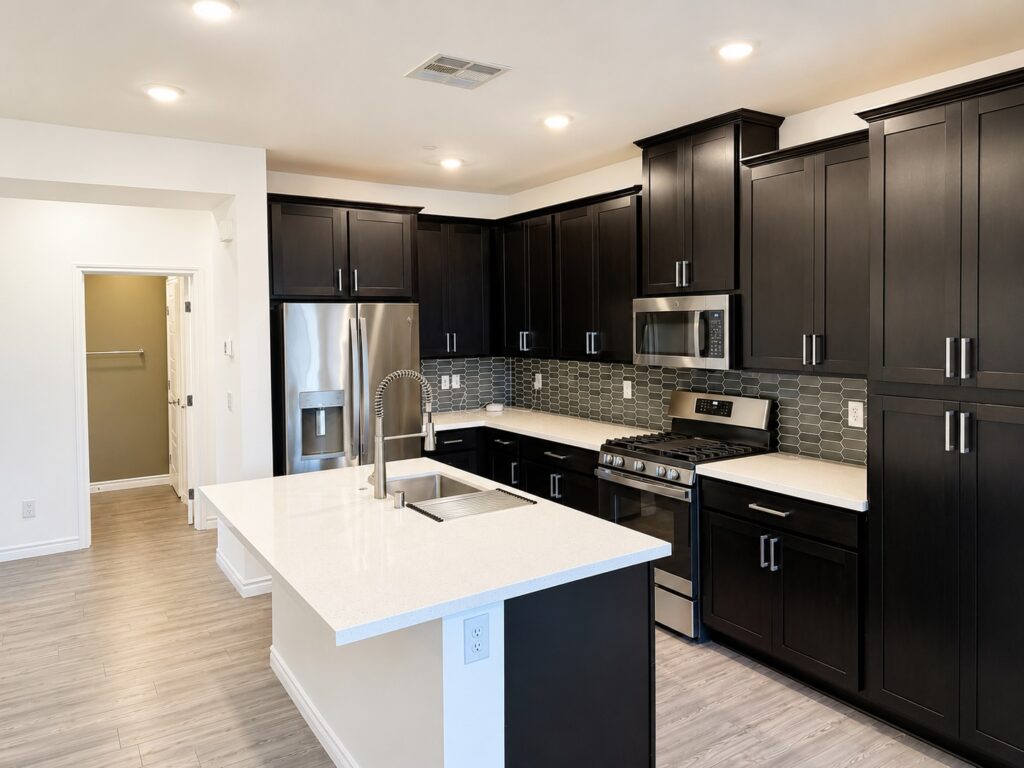
There's a certain kind of relief that comes with finding a home that just fits — enough room to breathe, a community that feels safe and cared for, and a little outdoor corner to call your own. This gated townhome on Las Vegas Boulevard checks every one of those boxes, and it's ready for a new resident to move in and settle down. Room to Spread Out With 3 bedrooms, 3 bathrooms, and 1,518 square feet of living space, this townhome offers the kind of layout that works for real life — whether that's a growing family, a roommate setup, or simply wanting a spare room for guests or a home office. It's spacious without being more than you need. A Front Porch Made for Slowing Down One of our favorite features is the leisurely front porch, with plenty of room for outdoor furniture. Picture it: a warm Las Vegas evening, a glass of iced tea, and nowhere else you need to be. It's the kind of small detail that turns a house into a home. Community Perks This townhome sits within a gated community that offers a shared pool for cooling off on hot Las Vegas days, a little dog park for four-legged residents to stretch their legs, plus the everyday convenience of a 2-car garage. Add it all up, and you get privacy, security, and comfort in one package. Then top all of that with knowing you are in the center for everything "Las Vegas". The Details This 3-bedroom, 3-bathroom townhome is available to lease for $2,300 a month. Located right on Las Vegas Blvd within a gated community, it offers easy access to everything the valley has to offer while still feeling tucked away and secure. Townhome for Lease - click here to see photos and for leasing information Homes like this one don't stay on the market long — the combination of space, privacy, and location, location, location makes it an easy place to picture your next chapter. If it sounds like the fit you've been looking for, now's the time to take the next step. Ready to see it for yourself? Contact Premier Homes Property Management today to schedule a tour of this Las Vegas Blvd townhome and take the first step toward your new home in the Las Vegas valley.
Read more
Forbes' June 2026 roundup of luxury pool design trends put a new phrase on buyers' radar: the "cocktail pool." It's a small, deep plunge-style pool built for hosting rather than laps, and design experts say it's now rivaling the sauna and the hot tub as the backyard amenity homeowners want most. For Las Vegas and Henderson buyers who already live outdoors nine months a year, it's easy to see why the idea is catching on. What Is a Cocktail Pool? According to Karen Larson, co-founder of Soake Pools, quoted in the Forbes piece, “smaller plunge and cocktail pools are answering homeowners’ pleas for an active, inviting outdoor centerpiece for hosting. They’re deep enough to immerse and cool off in, and low-maintenance enough to easily keep up with.” Rather than a sprawling lap pool, think a compact, sculptural water feature — sometimes paired with a swim-up bar or a built-in bench — sized for standing, sitting, and socializing rather than swimming laps. Clark County's Rules for Backyard Pools A cocktail pool is still a pool in the eyes of Clark County, and the Clark County Fire Department's pool safety code is one of the strictest in the country. Any new pool or spa requires a permit regardless of size. A non-climbable, four-sided perimeter fence at least 60 inches high is required, and if the pool isn't already separated from the home by that perimeter fence, an isolation fence at least 48 inches high (60 inches recommended) with openings no more than 4 inches wide must divide the pool from the residence. Gates must be self-closing and self-latching, with latches mounted out of a child's reach, and doors or windows leading directly to the pool area must be alarmed. Buyers considering a cocktail pool should budget for these barrier requirements from the start — a Premier Homes Real Estate agent can help walk through what a specific lot or floor plan will require before a buyer gets attached to a design. What It Can Do for Home Value Pool homes across the Las Vegas valley are commanding roughly a 4% to 8% resale premium over comparable homes without one, with that premium running highest in pool-hungry communities like Summerlin and Henderson. In dollar terms, a well-documented pool can add tens of thousands of dollars to a home's value. A cocktail pool gives buyers a way into that premium without the footprint, water bill, or upkeep of a full-size pool — a meaningful selling point in a desert market where buyers are drawn to low-maintenance luxury and roughly eight months of usable outdoor living each year. Made for Hosting The cocktail pool's whole appeal is entertaining, not exercise. It's the natural centerpiece for a sunset happy hour, a small dinner party that spills outside, a birthday gathering, or a casual weekend get-together with neighbors — especially paired with a swim-up bar or bar-height ledge for drinks and small plates. Because it's compact, it also suits smaller Henderson and Las Vegas lots where a full lap pool wouldn't fit, making resort-style entertaining possible on properties that couldn't accommodate it before. Whether a buyer is drawn to a cocktail pool for the entertaining, the low upkeep, or the resale bump, it's a feature worth discussing early — both for design and for what Clark County will require before the first guest ever steps in. Thinking about a home with a cocktail pool, or wondering what one could add to your current property's value? Reach out to Premier Homes Real Estate — our agents know the Las Vegas, Henderson, and valley-wide pool market and can help you find the right fit.
Read more
Moving from renting to owning your first home in Las Vegas or Henderson is exciting, but it's also a lot of moving pieces at once. Your lease, your finances, and your home search all have to line up. A little organization early on keeps the process smooth and helps you avoid last-minute scrambles as closing day approaches. Get Your Finances in Order First Before you start touring homes, pull your credit reports and dispute any errors. Gather two years of tax returns, pay stubs, and bank statements, since lenders will ask for them. Get pre-approved, not just pre-qualified, so you know your real budget once you account for your down payment, closing costs, and moving expenses. Once you're pre-approved, avoid new debt or large purchases; lenders re-check your credit before closing. Get Help Strengthening Your Credit Your credit score has a direct effect on your interest rate, so it's worth improving before you apply. Premier Homes Real Estate agents know credit counselors and lenders who can review your report and point out the fastest ways to raise your score, along with programs designed to help buyers who need a little extra support getting there. Ask your agent for a referral before you start the pre-approval process. Don't Forget First-Time Buyer Grants Many first-time buyers don't realize how much assistance is available for down payments and closing costs. Premier Homes Real Estate agents stay current on the grant and assistance programs available to Las Vegas and Henderson buyers, so ask your agent early. It could make a meaningful difference in what you can afford. Build Your Team Line up a real estate agent who knows the valley, then ask him for referrals to a trustworthy home inspector and, if needed, a real estate attorney. It's worth shopping rates with a few lenders too, since even small differences add up over a 30-year loan. Time Your Lease and Your Closing Check your lease for notice requirements, typically 30 to 60 days, and any early termination penalties. Build a buffer between your expected move-out date and your closing date, since closings can slip. Document the condition of your rental before you leave to help your deposit come back in full. Keep Your Paperwork in One Place Lease and deposit records, your pre-approval letter, purchase contract, inspection report, closing disclosure, and insurance policy all matter later. A single folder, physical or digital, saves you from digging for documents when you need them most. The renting-to-owning transition goes a lot more smoothly when you tackle it step by step rather than all at once. With your finances lined up, your team in place, and your paperwork organized, you'll be ready to move confidently from lease to keys. Thinking about making the move from renting to owning in Las Vegas, Henderson, or the surrounding valley? Contact Premier Homes Real Estate today, and let one of our agents help you find the right home and the right assistance programs to get you there.
Read more
If you drive Boulder Highway between Wagonwheel Drive and Tulip Falls Drive, you've seen the cones, the center-median construction, and the new streetlights going up one by one. That's Reimagine Boulder Highway, the City of Henderson's $185 million rebuild of the 7.5-mile corridor, and it's reshaping one of the valley's oldest and busiest roads into something very different: a calmer, safer, more walkable stretch built around transit, biking, and redevelopment. What's Actually Changing Boulder Highway is dropping from six travel lanes to four. In their place: wider sidewalks, elevated bike lanes on both sides of the road (eventually full multidirectional cycle tracks), hundreds of new streetlights on a corridor that has historically been dark at night, and a center-running bus rapid transit line with raised platforms and new shelters replacing the old curbside stops. The goal, per the city and the Regional Transportation Commission of Clark County, is safety first — a 2020 RTC study found Boulder Highway accounted for roughly a quarter of Henderson's traffic deaths. Timeline and Cost Construction started in summer 2024 and, as of mid-2026 reporting, the project is now budgeted at $185 million (up from an original $172 million, largely to fund additional transit shelters) and isn't expected to wrap until August 2027 — about a year later than first planned. Work is moving from south to north, with intersection upgrades and shelter installations continuing through the corridor into 2026 and 2027, per Review-Journal coverage. Short-Term Pain for Existing Businesses Construction hasn't been easy on the businesses already on the corridor. Some merchants have reported foot traffic down 30 to 50 percent since work began, and a resident-led petition has raised concerns about lane conditions, lighting gaps mid-construction, and the placement of bus stops in the center median. It's a real, near-term cost that current owners and their landlords are absorbing while the corridor is rebuilt. The Long-Term Redevelopment Story The longer view looks different. The City of Henderson reports that 41 new businesses have opened along the corridor since the project broke ground, 23 of them in designated redevelopment zones, adding roughly 135 new jobs. Nearly 3,000 residential units are approved or in various stages of construction along the 7.1-mile Henderson segment. A safer, better-lit, transit-connected corridor with dedicated bike infrastructure is exactly the kind of investment that tends to draw redevelopment interest over time — even if it's a bumpy few years to get there. Cadence: Proof the Corridor Is Already Working The clearest evidence that Boulder Highway's redevelopment story is real sits right on the corridor: Cadence, the 2,200-acre master-planned community that has ranked among the top-selling master-planned communities in the entire country in recent industry rankings, including a No. 1 ranking for best-selling master plan in the Las Vegas Valley. Cadence has two entrances directly on Boulder Highway: one at Warm Springs Road and Boulder Highway on the community's west side, and a second at Water Street and Boulder Highway, where Henderson extended Water Street to connect Cadence to the historic downtown Water Street District and Lifeguard Arena. A community selling homes at that pace, with its front door literally on the corridor being rebuilt, is a strong signal of where Henderson expects Boulder Highway's momentum to go next. What This Means for Buyers, Sellers, and Business Owners For anyone weighing commercial space along Boulder Highway — whether leasing a storefront, buying a small retail building, or evaluating a redevelopment parcel — this is a corridor worth watching closely. Premier Homes Business Brokerage specialists track growth corridors like this one across the valley and can help business owners weigh near-term construction disruption against the corridor's long-term trajectory. For residential buyers and sellers eyeing the nearly 3,000 units planned nearby, Premier Homes Real Estate agents can walk through what the completed corridor will mean for access, walkability, and value. And for owners who already hold property along Boulder Highway, Premier Homes Property Management can help manage tenants and cash flow through the construction period. Boulder Highway won't look or function the way it has for the last 90 years. Henderson is betting that a slower, safer, transit- and bike-friendly corridor pays off in redevelopment — and the early business and housing numbers suggest that bet is already paying off, even as the finish line sits a year further out than originally planned. Curious how the Boulder Highway corridor — or any growth area in Las Vegas and Henderson — fits your buying, selling, leasing, or investment plans? Contact Premier Homes today and let our Real Estate, Business Brokerage, and Property Management teams put their combined market knowledge to work for you.
Read more
Las Vegas sports and training go a lot deeper than the Strip marquees. In under a decade, this valley went from a town without a single major pro franchise to one fielding teams across nearly every league in the country — and soon, basketball too. Between the pros, the minor leagues, motorsports, water sports, and a few disciplines you won't find grouped anywhere else, Las Vegas has quietly become one of the most complete sports towns in America, with real training behind almost all of it. The Big Leagues, and One More Coming The Vegas Golden Knights arrived first, in 2017, and delivered the most successful inaugural season in modern NHL expansion history — a run to the Stanley Cup Final in year one. The Las Vegas Raiders followed in 2020, relocating from Oakland into the $1.9 billion Allegiant Stadium, with the team's headquarters and training complex — the Intermountain Health Performance Center — built separately in Henderson, an angular, 335,000-square-foot facility with indoor and outdoor practice fields. The Las Vegas Aces moved from San Antonio in 2018 and have since become back-to-back WNBA champions (2022, 2023), playing at Michelob ULTRA Arena. UNLV Rebels athletics round out the college scene. And the NBA is now actively considering Las Vegas for expansion, with a decision expected as soon as this year — multiple ownership groups, including Golden Knights owner Bill Foley, are already competing for the franchise. Minor League and Rising Teams The Aviators (AAA baseball) trace back to 1983 as the Las Vegas Stars, went through a run as the alien-nodding "51s," and rebranded again in 2019 with a move to Las Vegas Ballpark in Downtown Summerlin. The Henderson Silver Knights (AHL) practice and train the next generation at America First Center on Water Street — a two-rink public facility in downtown Henderson that also runs public skating and youth hockey programs. The Vegas Knight Hawks (Indoor Football League) play out of Henderson's Dollar Loan Center at Lee's Family Forum. Between the Raiders' HQ, the Silver Knights' training home, and the Knight Hawks' arena, Henderson has quietly become as much a sports town as the Strip itself. Built for Speed Las Vegas Motor Speedway (lvms.com) has hosted NASCAR since 1998, but the valley's motorsports pedigree actually goes back further — Formula 1 raced here at Caesars Palace in 1981 and 1982, decades before F1 returned to a purpose-built Strip circuit in 2023. For anyone who wants to do more than watch, the Mario Andretti Racing Experience at LVMS puts everyday drivers behind the wheel of an Indy-style open-wheel car for real racing instruction, no professional license required. Beyond the Obvious Soccer, lacrosse, rugby, and volleyball don't always make the highlight reel here, but they're well-established. Las Vegas Lights FC (USL Championship) has played at Cashman Field since 2018, with a youth academy at Kellogg-Zaher Soccer Complex and further development through Villarreal Las Vegas Soccer Academy. Fewer people know the valley also fields a professional lacrosse team: the Las Vegas Desert Dogs (National Lacrosse League), backed by an ownership group that includes Wayne Gretzky and Steve Nash, began play in 2023. Youth lacrosse has a real pipeline too, through Southern Nevada Lacrosse and Nevada Lacrosse South. Rugby has deeper roots here than almost any other niche sport in the valley — the Las Vegas Blackjacks RFC has fielded a competitive men's club since 1976. And clubs like Vegas United Volleyball and the Las Vegas Beach Volleyball Club (sand courts included) keep that sport growing both indoors and out. On the Water Lake Las Vegas Water Sports turns Henderson into a legitimate water sports destination — wakeboarding off a dedicated cable park, paddleboarding, kayaking, and even flyboarding, all just minutes from the Strip. Only in Vegas Two categories exist here, almost nowhere else. Acrobatics and circus arts training — through studios like AGC Las Vegas, founded by a Cirque du Soleil acrobat and an Olympic coach, and Cirque's own NexGen talent program — turns a Vegas entertainment specialty into a legitimate athletic career path for kids willing to put in the training. And for competitive gaming, HyperX Arena at Luxor gives esports a full arena stage, practice space, and community that most cities can't come close to matching. Home Base for Every Sport Wherever your family's interest lands — the diamond, the water, the track, the mat, or the stage — knowing which neighborhoods sit closest to these facilities makes a real difference in daily life. Premier Homes Real Estate knows the valley's communities inside and out, including exactly which ones put you minutes from the training your family cares about. Whether you're chasing a fastball, a wave, a lap record, or a stage spotlight, Premier Homes Real Estate can help you find a home in the Las Vegas or Henderson community built for your family's game. Reach out today to start the search.
Read more
If you're thinking about buying a home in the Las Vegas or Henderson area, the smartest step you can take happens before you ever tour a house: getting pre-qualified for a mortgage. It's a quick conversation with a lender, but it changes everything about how you search, what you can offer, and how sellers see you. What a Pre-Qualification Letter Actually Is A pre-qualification letter is a lender's estimate of how much you can borrow, based on a quick review of your income, debts, and credit. It's not a guarantee of final approval, but it's a credible signal that you're a serious, financially prepared buyer — and in a competitive market, that signal matters. It Shows You What You Can Really Afford It's easy to fall in love with a home before you know your real budget. Pre-qualification puts a number in front of you early, so you're not wasting time touring properties outside your range or, worse, underestimating what you can afford and missing out on the right home. It Makes Your Offer Stand Out In the Las Vegas valley, well-priced homes can draw multiple offers fast. Sellers and their agents want to know an offer is real before they take a property off the market. A pre-qualification letter attached to your offer tells them you've already cleared a major hurdle — it can be the difference between winning a home and losing it to a more prepared buyer. It Speeds Up the Path to Closing Once you're pre-qualified, your lender already has your basic financial picture on file, which means fewer surprises and a faster process once you're under contract. That head start can shave real time off your closing timeline. We're Happy to Point You in a Direction — You Make the Call A question we hear often is whether our agents can recommend a lender. We're glad to share a list of loan officers our Premier Homes Real Estate salespeople have enjoyed working with over the years, and we're happy to talk through what made those relationships work well for past clients. What we won't do is push you toward a single lender. Steering buyers to one loan officer, especially in exchange for referral fees or other perks, runs against RESPA (the Real Estate Settlement Procedures Act) and isn't how we do business. We'll hand you options and honest input — the choice of who to work with is always yours. Buying a home is one of the biggest financial decisions you'll make, and a pre-qualification letter is the foundation that everything else is built on. It sets your budget, strengthens your offers, and keeps your home search focused on properties you can actually buy. Ready to start your home search in Las Vegas, Henderson, or the surrounding valley? Contact Premier Homes Real Estate today, and our agents will connect you with trusted lenders and guide you through every step, from pre-qualification to closing.
Read more
Pools, clubhouses, and walking trails used to be the checklist for a great master-planned community. Now developers around the country are adding something new to that list: a brewery or beer garden. A recent feature in Builder Magazine highlighted how communities like Moxie in Lockhart, Texas, and Braden in Sacramento, California, are building breweries into their town centers as “cultural living rooms” — gathering spots designed to fight loneliness and build real neighborly connection. It's a trend worth watching here in the Las Vegas Valley, especially since several of our own established communities are missing this piece. Why Buyers Are Asking for This According to the America at Home Study cited in the article, 31% of homebuyers said a community hub with a microbrewery, patio seating, and live music would be an important factor in choosing where to buy — and that number climbs to 34% among Millennials. The demand lines up with two other bodies of research. The U.S. Surgeon General's 2023 advisory on loneliness found that roughly half of American adults report experiencing loneliness, and named community design as one of the tools to rebuild connection. And the National Association of Realtors' Community and Transportation Preference Survey found that 89% of respondents want sidewalks and places to walk, 82% want to be within walking distance of shops and parks, and nearly two-thirds would pay more to live somewhere walkable. Taken together, the message is consistent: buyers aren't just shopping for square footage, they're shopping for a place to belong. An Idea With Deep Roots None of this is new — it's a return to something older. In England, interwar council housing estates like Downham in South East London and Quarry Hill in Leeds were built with large, purpose-designed pubs at their center, meant to serve every age of drinker in the neighborhood the way a village pub always had. In Germany, Biergartens trace back to 1812, when Bavaria's King Maximilian I allowed brewers to sell beer in the gardens above their cooling cellars, shaded by chestnut trees planted over the tunnels below. Those gardens became inclusive gathering spaces open to all classes, so much so that Bavaria's 1999 Beer Garden Ordinance formally recognizes them as fulfilling an “important social and communicative function.” The brewery-anchored town center isn't a marketing gimmick — it's a centuries-old formula for building a neighborhood that developers are simply rediscovering. Vegas Has Tried This Before Las Vegas has its own chapter in this story, and it's worth knowing before assuming this is just a marketing trend. Until the early 1990s, state law didn't allow breweries to operate in the city at all. That changed in 1993, when Tom “Big Dog” Wiesner, owner of the Holy Cow! Casino on Las Vegas Boulevard, persuaded the state to change the law so he could add Nevada's first brewery to his casino. It worked: Holy Cow's beers won national awards and supplied several other Big Dog's properties, before the casino itself closed in 2002 amid the post-9/11 tourism slump. Other casinos followed. The Monte Carlo opened the only brewpub on the Strip when it debuted in June 1996, but stopped brewing on-site a decade later once construction of CityCenter took over the building it used, and the pub closed for good during the resort's 2016 remodel into what's now Park MGM. Downtown, Main Street Station added its Triple 7 Restaurant and Microbrewery that same year, becoming the first brewery in Downtown Las Vegas — and it's still pouring today. Ellis Island's on-site brewery, added in 1998, grew into one of the state's most-awarded breweries before the casino demolished it in 2022 to make room for more casino floor, shifting production to an off-site facility. The pattern is familiar: casinos have long used an in-house brewery to stand out, then absorbed, relocated, or cut it loose once the real estate became more valuable for something else. Master-planned communities are now borrowing the same idea — a signature, locally brewed gathering spot — but building it in as a permanent piece of the town center rather than a novelty competing with a casino floor for square footage. Why This Fits the Las Vegas Market Las Vegas and Henderson have a head start already. Local names like Tenaya Creek, Able Baker, and CraftHaus have shown there's real appetite for neighborhood brewerieshere, and our valley is home to several of the top-performing master-planned communities in the country — Cadence ranked No. 3 nationally and Summerlin landed in the top 10 in recent John Burns Real Estate Consulting rankings. Both are already built around walkable village centers, which makes a hyper-local brewery or beer garden a natural next step. The Gap in Our Established Communities Here's the catch: many of our valley's well-established communities were master planned years before this trend took hold, and their town centers and retail pads simply don't have this kind of amenity yet. That's not a dead end — it's an opening. Underused retail space in an established village center can often be repositioned for exactly this kind of concept, giving an older community a fresh reason for buyers and renters to take a second look. Does the Math Actually Work? There's real research behind this, not just intuition. A 2020 study in Papers in Applied Geography, “Going out for a Pint,” mapped brewery locations against Walk Score across San Diego and found that walkability correlates with brewpubs — the taproom-style breweries that sell most of their beer on-site — but not with standalone production microbreweries. Urban planners use a “5-minute walk,” a quarter-mile radius, as the standard distance people will cover before defaulting to a car; it's the same benchmark Starbucks uses for site selection. Beyond that walk-up ring, site selectors typically layer on a 10-to-15-minute drive-time radius to capture weekend and destination traffic. The economics back it up: a half-barrel sold through the taproom nets roughly four times what it nets wholesaled to a distributor, so walkability isn't just a nice-to-have, it's the lever that drives the margin. If you're touring a community marketing a brewery or beer garden as an amenity, it's worth asking the developer a few pointed questions: how many rooftops sit within that quarter-mile walk-up radius, and is the concept designed as a walkable taproom or just a beer-branded restaurant on a drive-to pad? Buyers and developers alike should push on this the same way they'd ask about school boundaries or park access — it's a real, measurable amenity, not just a logo on a sign. For investors weighing whether a specific brewery or taproom concept pencils out in a given community, that's exactly the kind of trade-area math our Premier Homes Business Brokerage department can run — walk-up density, drive-time population, and taproom-versus-wholesale economics — before you commit to a lease or a deal. Contact them early in the process, not after you've already signed. Meet Our Business Brokerage Team This is where Premier Homes Business Brokerage comes in. This department specializes in business sales and leasing — working directly with entrepreneurs who want to buy, sell, value, or lease space for the kind of local bar, restaurant, or brewery concept that could fill exactly this gap in an established community. Whether you're a business owner looking to relocate into a retail village center or a community exploring what kind of operator could anchor an empty pad, he can walk you through the deal. What Buyers Should Know Before Touring New Communities If a brewery-anchored community catches your eye, keep one thing in mind: you must bring your Premier Homes Real Estate agent with you on your very first visit to any new home builder's sales office or model home tour. Builders will not add your agent after that first visit — representation has to be registered right at the door, or you lose the benefit of having someone in your corner during contract review, upgrade pricing, and incentive negotiations. Our new home specialist handles exactly this, so loop him in before you ever step onto the lot. The Investment Angle For investors, amenities like this matter too. Our Property Management department regularly fields questions from renters looking for exactly this kind of walkable, social community, and Business Brokerage tracks which growth corridors in the valley are primed for retail and hospitality concepts like a local brewery. Because all three of our departments meet regularly to compare notes, any Premier Homes agent you work with can speak to how an amenity like this affects both livability and long-term value. The bottom line: as more Las Vegas-area developers look to build “social ROI” alongside financial ROI, don't be surprised if your next favorite hangout — new build or retrofit — is a short walk from your front door. Curious which Las Vegas or Henderson communities are planning amenities like this, or want to explore bringing one to your own neighborhood? Contact Premier Homes today — our Real Estate, Business Brokerage, and Property Management departments know the valley's master-planned communities inside and out, and we'll make sure you have the right representation and the right department from your very first conversation.
Read more