


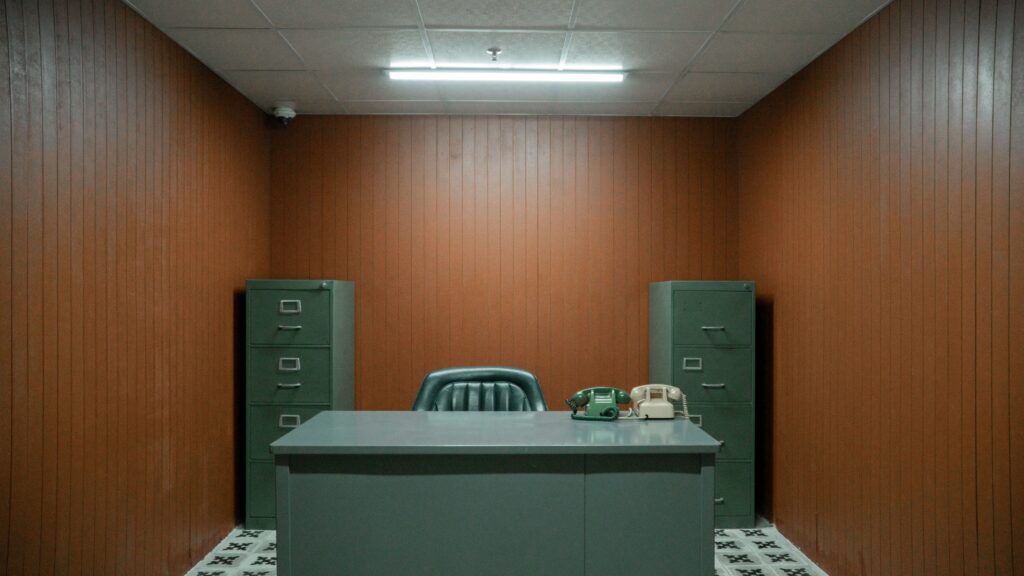
There was a time when a home office meant a desk shoved into a spare corner, a filing cabinet nobody opened, and a chair that was really meant for the dining table. That era is quietly ending. As more of us split our working lives between company offices, coffee shops, and our own four walls, the home office has become something worth designing on purpose — a space that has to do real work (focus, calls, deep thinking) while also feeling like part of a home we actually want to live in. If you're planning your own space, or just love thinking about what makes a room work, here's where to start, what's new in 2026, how different design cultures approach the problem, and why your next officemate might be an AI that listens. Start With the Fundamentals Before trends and tech, a good home office rests on a handful of unglamorous basics. Natural light matters more than almost anything else — where the desk sits relative to a window changes how a room feels by mid-afternoon, and it changes how you look on video calls too. Ergonomics is next: a chair that actually supports you, a monitor at eye height, a keyboard that doesn't force your wrists into a shrug. Acoustics are easy to overlook until a call goes badly — a rug, a bookshelf, even heavy curtains can quiet a hard-surfaced room. And then there's the quieter discipline of storage and cable management, because visual clutter has a way of becoming mental clutter. Once those fundamentals are settled, the real fun begins: deciding what kind of office you actually want to live inside. What's New in 2026 Home office design right now is being shaped by two forces pulling in the same direction: technology that wants to disappear, and materials that want to feel real again. On the material side, designers are moving away from polished, uniform surfaces toward what's being called tactile naturalism — solid wood, unfinished mineral composites, surfaces where you can see the maker's hand. Color palettes are splitting into two camps: deep, anchoring tones like plum-brown for spaces that want gravity, and desaturated pastels like sage and powder blue for spaces built around sustained focus, chosen specifically because they don't compete with your attention the way a bright accent wall would. On the technology side, the goal has flipped from showing off gadgets to hiding them. Wireless charging is being built directly into desk surfaces, outlets are recessed into furniture, and task lighting tucks itself out of sight until you need it. Some desks and chairs now carry posture sensors that make small automatic adjustments before you'd even notice you were slouching — ergonomics handled algorithmically rather than through willpower. Maybe the most interesting shift is spatial: offices are stopping being one room. Instead, work is distributing itself across the house in what's being called multizonal design — a console table in a hallway that becomes a stand-up workspace for an hour, a window bay with a single chair for reading and thinking, a corner that's only ever "the office" between nine and noon. And increasingly, wellness isn't an afterthought bolted onto the room afterward — it's built in from the start, with movement equipment, a small meditation nook, or air-purifying plants treated as core furnishings rather than extras. What Different Design Cultures Teach Us One of the most useful things about looking at home office design globally is realizing there isn't one "correct" way to build a focused space — there are several coherent philosophies, each solving for something slightly different. Japandi — the fusion of Japanese wabi-sabi and Scandinavian hygge — has become something of a shorthand for deep-work design. Wabi-sabi is about finding beauty in natural imperfection and editing rather than accumulating; hygge is about functional warmth, the kind of coziness that still lets you get things done. Together they produce offices with floating desks, warm low-temperature lighting, natural wood, and cables hidden with almost architectural discipline — the idea being that if a room is visually quiet, your mind has an easier time getting quiet too. Feng shui takes a more energetic view of the same problem. It organizes a room around the "command position" — a desk placed so you can see the door without sitting directly in line with it — and treats decluttering not just as tidiness but as an active practice that keeps energy, and attention, moving freely through the space. Lagom, the Scandinavian idea of "just the right amount," pushes against both bare minimalism and maximalist decorating in favor of restraint — enough personality to feel like yours, not so much that it becomes noise. It's worth noting, too, that the very idea of a "home office" isn't culturally universal. Some households treat it as strictly professional territory, sealed off from domestic life; others blend the two much more freely, letting work happen at the kitchen table or in a shared family room without much separation at all. Neither approach is more correct — they reflect genuinely different ideas about where work belongs in a life. Can an Office Combine Tasks and Comfort? Absolutely — and It's the Whole Point Now The multifunctional office isn't a compromise anymore; it's arguably the dominant idea in home office design today. A desk can double as a console table when the workday ends. A guest bedroom can hide a fold-away desk that disappears the moment company arrives. Storage on casters lets a room flip from office to bedroom in the time it takes to roll a box aga inst the wall. Built-ins under a staircase or inside a closet can hold an entire workspace that vanishes behind a door. The mindset shift is this: comfort used to be treated as a nice-to-have layered on top of a "real" workspace. Now it's treated as an input to productivity itself. Better light, better seating, a calmer palette, a plant, a place to stretch — these aren't rewards for finishing work, they're part of what makes good work possible in the first place. An office that also functions as a reading nook, a quiet spot to decompress, or a guest room isn't diluting its purpose. It's acknowledging that the room, like the person using it, has more than one job. The Listening Office: AI That Speaks, Reminds, and Remembers Here's where the home office gets genuinely new. Alongside the physical redesign of these spaces, a layer of voice-driven AI is emerging that can talk to you, remind you of tasks, and — increasingly — just listen while you think out loud and catch the ideas you'd otherwise lose. The mainstream voice assistants have all leaned into this. Amazon's Alexa+ now supports natural, back-and-forth conversation and remembers your preferences over time, making it genuinely useful for voice-based task capture rather than just timer-setting. Apple's Siri and Google Assistant both handle spoken reminders, calendar events, and shortcuts across phones, watches, and smart speakers, so an idea you say out loud at your desk can land directly on tomorrow's to-do list. Microsoft Copilot brings a similar capability into work tools like Outlook and Teams, useful if your home office doubles as your actual job. Beyond the built-in assistants, a newer category of wearable AI is aimed almost entirely at this problem: capturing spoken thoughts before they evaporate. Devices like the Plaud NotePin use a press-to-record model and produce notably accurate transcripts and summaries — a deliberate, intentional way to capture a thought without an always-on microphone. Bee, on the budget end, offers always-listening ambient capture at a low price point, though it's worth knowing it's now an Amazon product, which raises the same privacy questions people ask about any always-on device in the home. Omi takes an open-source approach, letting people build their own plugins around what the device captures. It's a genuinely fast-moving space — worth mentioning that the Limitless Pendant, one of the earlier and better-known entries in this category, was acquired and discontinued in the time it takes to write about it, a reminder that this corner of home office tech is still very much being figured out in real time. If you're designing a space around one of these tools, it's worth choosing based on how deliberate you want the listening to be, and being honest with yourself about the trade-off between convenience and always-on ambient recording in your own home. Bringing It All Together The perfect home office in 2026 isn't a single look you can copy from a catalog. It's a set of decisions: how much light you can borrow from the day, which design philosophy actually matches how your mind works, whether the room needs to be exclusively yours or comfortable sharing its space with the rest of your life, and how much you want technology to actively participate in how you think and remember. Design the room around those questions honestly, and the aesthetics tend to follow.
Read more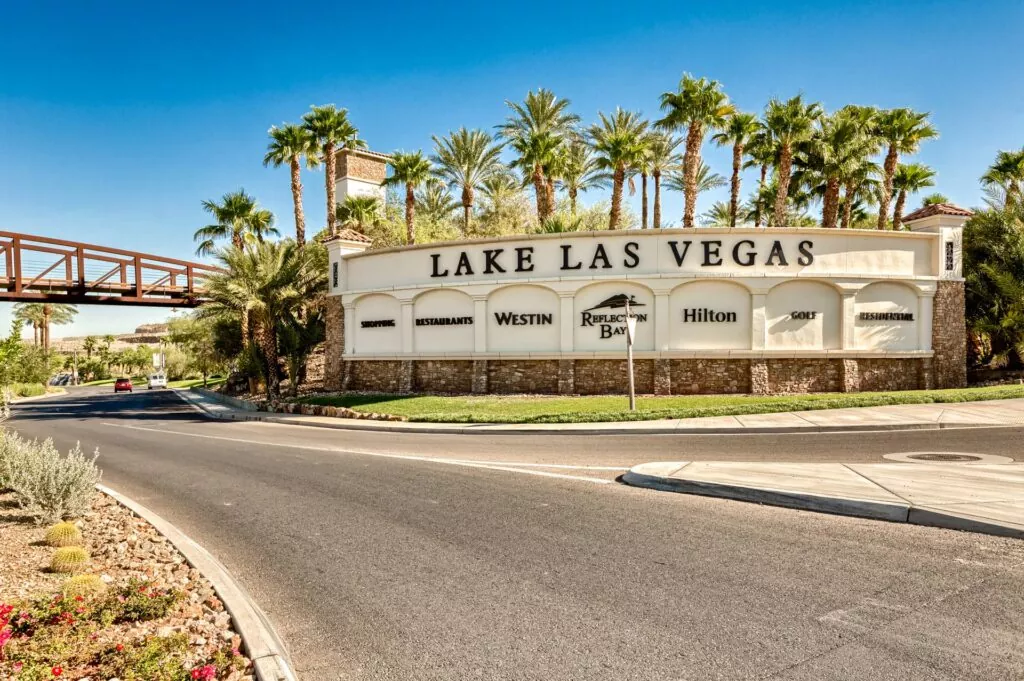
Life on the Water at Lake Las Vegas Premier Homes Blog Just 25 minutes from the Strip, Lake Las Vegas feels like a different world entirely. Built around a private, 320-acre lake tucked into the foothills of Henderson, this master-planned resort community pairs waterfront living with the kind of amenities you'd expect from a luxury resort — because in many ways, it still is one. For buyers who want lake life without leaving the valley, Lake Las Vegas is one of the most distinctive communities we show clients. https://youtu.be/TFjmVl_NET4?si=DaFhdS928PK4XOIO Life on the Water The lake itself is the whole point. Residents kayak, paddleboard, and cruise the water in electric Duffy boats, and Lake Las Vegas Water Sports rents everything from e-foils to tandem kayaks for an afternoon on the water. For something more organized, the Paddle Vegas dragon boat club and the Lake Las Vegas Rowing Club both call the lake home, giving residents a genuine community around the water rather than just a scenic backdrop. MonteLago Village At the center of it all sits MonteLago Village, the community's pedestrian-friendly gathering place along the lakefront promenade. It's home to lakeside restaurants, entertainment, and everyday conveniences like Seasons Grocery & Deli, so residents can walk to dinner or grab groceries without ever getting in the car. Championship Golf Golfers have two Jack Nicklaus-designed courses to choose from: Reflection Bay Golf Club, a Nicklaus Signature course that once hosted the Wendy's 3-Tour Challenge, and SouthShore Country Club, Nevada's first private Nicklaus Signature course, set along the lake's largest privately-owned shoreline. Trails, Wellness & Resort Amenities Beyond the water and the fairways, Lake Las Vegas offers miles of hiking and cycling trails through the surrounding foothills, plus the private Lake Las Vegas Sports Club for residents who want a gym, pool, tennis, or pickleball closer to home. Two full-service resorts — The Westin Lake Las Vegas Resort & Spa and The Hilton Lake Las Vegas Resort & Spa — round things out with waterfront dining and spa days that don't require a hotel reservation to enjoy. Finding Your Place at the Lake Homes at Lake Las Vegas range widely — waterfront estates, custom hillside homes with lake and mountain views, and low-maintenance condos and townhomes in guard-gated enclaves. That range is part of what makes the community work for so many different buyers, whether it's a full-time residence, a second home, or a lock-and-leave retreat. It also means the buying process looks a little different from one section of the community to the next, from HOA structures to view-lot pricing, which is exactly where having an agent who knows the community well makes a difference. For buyers who've pictured themselves paddling out on a quiet morning or walking to dinner along the lakefront, Lake Las Vegas delivers a lifestyle that's genuinely hard to find anywhere else in the valley — and it's still close enough to Las Vegas and Henderson to keep everyday life convenient. Thinking about buying, selling, or renting at Lake Las Vegas or anywhere else in the Las Vegas and Henderson valley? Premier Homes Real Estate knows this community inside and out and is ready to help you find your spot on the water.
Read more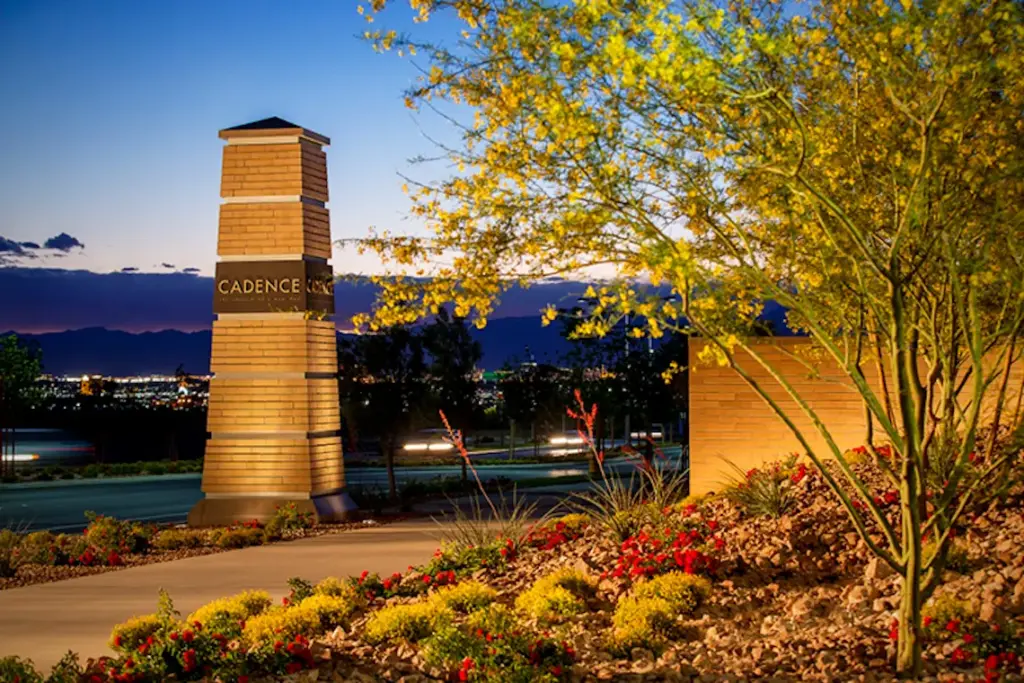
For growing families, the size of the backyard is only part of the equation — what's outside the front door matters just as much. Cadence was built with exactly that in mind. Spread across roughly 2,200 acres in Henderson, this master-planned community is on track for about 12,250 homes at full buildout, and it was designed from the ground up around parks, trails, and open space instead of squeezing them in afterward. For families who want their kids to be able to walk or bike to a park, Cadence is one of the strongest fits in the valley. https://youtu.be/uQKXw-emb1g?si=ak4oRC9KDEEQwWlj Central Park: 50 Acres Built for Families The heart of the community is Central Park, a 50-acre amenity hub with a six-lane lap pool, a 2,000-square-foot splash pad, pickleball courts, children's play areas, two amphitheaters, and wide-open turf for everything from soccer practice to family picnics. It's the kind of amenity that turns a Saturday morning into a full day out without ever leaving the neighborhood. Parks in Every Direction Central Park is just the start. Henderson has built a growing network of neighborhood parks throughout Cadence, including Desert Pulse Park and its adjoining Dakota Dog Park, the skate park and covered playgrounds at Desert Symphony Park, casual green space at Citrine Sky Park and Blooming Cactus Park, and cornhole, table tennis, and a children's playground at Sunset Strip Park. More are on the way, including the dedicated Cadence Sports Park for organized fields and sports facilities — so the park closest to home just keeps getting closer as the community fills in. Trails Built for Getting Outside Miles of interconnected walking and biking trails link the neighborhoods together, giving kids safe routes to school and parks and giving parents an easy way to get everyone outside without loading up the car. It's a small design choice that adds up to a lot more time spent outdoors than in a typical subdivision. Schools & Everyday Life Cadence Elementary sits inside the community itself, with Burkholder Middle School and Basic High School serving older kids. Families who want charter options nearby also have Doral Academy, Somerset Academy, and Pinecrest Academy within reach. Combine that with fiber-optic internet available to every home, and Cadence covers both the outdoor lifestyle and the day-to-day logistics that matter to a large family. Room to Grow: New Construction & Resale Cadence is still building out, with eight active builders — including Century Communities, D.R. Horton, KB Home, Lennar, Woodside Homes, Richmond American, Pulte, Taylor Morrison, and Toll Brothers — offering new construction alongside a growing resale market, with prices spanning roughly $370,000 to $1.2 million. That range means families can often find a floor plan sized for a big household at a price point that fits. One thing every buyer touring new construction in Cadence needs to know before setting foot on a builder's lot: bring your Premier Homes Real Estate agent with you on your very first visit to any builder's sales office or model home. New home builders will not add a buyer's agent after that first visit — representation has to be registered right from the start, or you lose the benefit of having your own agent negotiating on your behalf. Whether it's the parks, the trails, the schools, or simply the room to grow, Cadence is built around the way a large family actually lives day to day — and that's exactly why we send so many of our clients with kids to look here first. Ready to see what family life in Cadence looks like in person, or explore other family-friendly communities across Henderson and the Las Vegas valley? Premier Homes Real Estate is ready to help, including matching you with our new home specialist if new construction is on your list.
Read more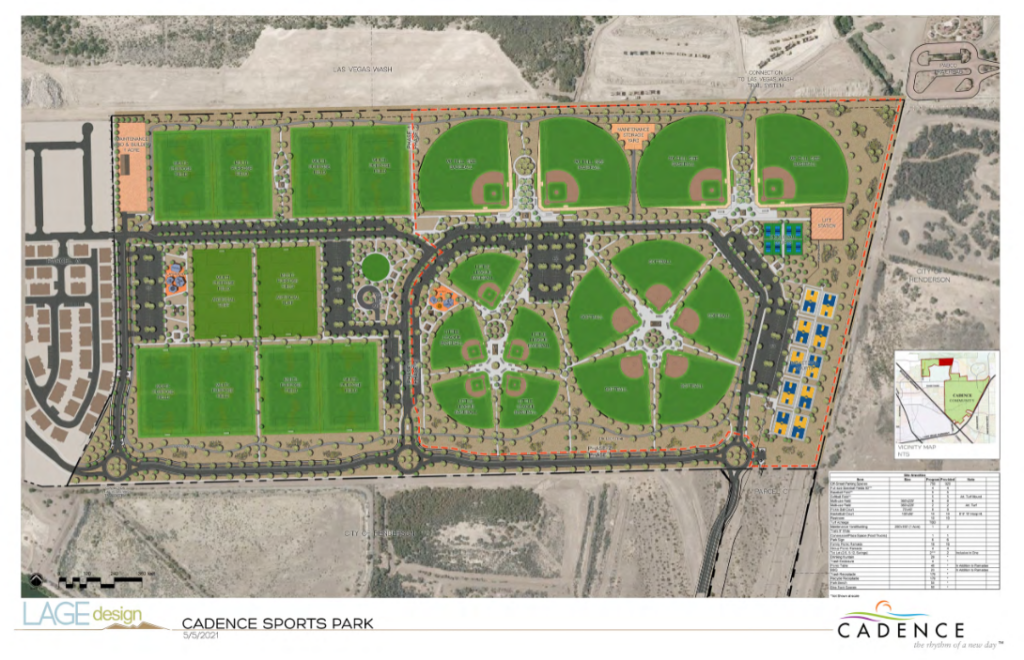
Henderson has a new athletic complex on the drawing board, and it's going in one of the city's fastest-growing corners: Cadence, the 2,200-acre master-planned community east of Boulder Highway. The Cadence Sports Park is currently in the design phase with the City of Henderson, but between the fields going in and the trail network already threading through the community, it's worth a closer look at what's coming, who's paying for it, and how far a resident could actually ride or walk to reach it. What's Actually Being Built The city's own project page lays out a genuinely full athletic complex: multipurpose and baseball fields (including little league), softball fields, pickleball and basketball courts, a food truck area, play areas and picnic space, shade structures and restrooms, and a lift station to support it all. Just as notable is what it ties into: the park is designed to connect directly into the Las Vegas Wash trail system, so it isn't just a stand-alone facility; it's a node on a much larger trail grid. No construction timeline or opening date has been published yet, since the project is still in design. A Public-Private Partnership, By the Numbers This isn't a City of Henderson project built from scratch on the public dime. Cadence's developer, The LandWell Company (the land investment arm of Basic Management, Inc.), is funding the bulk of construction. Coverage of Henderson's most recent budget approval describes it as a planned 100-acre, developer-funded athletics complex. The city's role shows up on the equipment side: the assistant finance director told the council that one-time equipment costs for the park accounted for roughly a $2.4 million difference between expenditures and revenue in this cycle, a gap covered through the general fund within Henderson's overall $1.01 billion budget. In short, LandWell is building it, and the city is outfitting it and will maintain it going forward, which is the same public-private structure that's produced most of Cadence's other parks to date. The Trail System Tying It All Together Cadence was built with roughly 30 acres of internal trails and bike paths woven through its 450-plus acres of open space, with the community designed so that every home sits within a 10-minute walk of a park. That internal network isn't a closed loop, it feeds directly into the Las Vegas Wash trail system, which in turn connects into Henderson's River Mountains Loop Trail, a roughly 35-mile paved loop that circles the River Mountains and links Henderson, Boulder City, Hoover Dam, and the Lake Mead National Recreation Area. Access points such as the Mountain Lake Park trailhead near Lake Las Vegas Parkway sit along that same loop. Practically speaking, that means a resident of Lake Las Vegas, or any other neighborhood strung along the Wash and River Mountains trails, has a car-free bike or walking route that eventually lands at the new fields in Cadence. It's a meaningfully bigger service area than the sports park's own footprint would suggest. More Than One Park in Cadence The sports park will join a growing list of parks already open in the community. Cadence Central Park is the anchor at 50 acres, notable for having been built on one of the largest reclaimed brownfield sites in the country, and it already connects directly to the Las Vegas Wash Trail. Blooming Cactus Park, Henderson's 74th park and the third built in Cadence, added a Ninja Warrior-style fitness course, the first of its kind in the city, alongside pickleball, tennis, and basketball courts. Citrine Sky Park rounds things out with volleyball courts and open lawn space. The city's parks and trails project list also shows Endless Sky Park, Mountain Bluebird Park, and Luminoso Park still to come in the same community, so the sports park is really one piece of a much longer buildout. If You're House-Hunting Near It Amenities like this tend to move Cadence up the list for buyers who want new construction with the recreation already mapped out. If that's you, one thing to know before you ever set foot on a builder's lot: you have to bring your Premier Homes Real Estate agent with you on your very first visit to a new home builder's sales office or model home. Builders in Nevada won't add buyer representation after that first visit, so if you tour a Cadence model home on your own first, you lose the ability to have an agent represent you on that purchase. It's worth setting up that first visit with your agent before you go look, not after. The Cadence Sports Park doesn't have a groundbreaking date yet, but between the design already underway, the funding split between LandWell and the city, and a trail network that already reaches well beyond Cadence's own boundary, it's shaping up to be a valley-wide amenity rather than a neighborhood perk. Thinking about buying, selling, or renting near Cadence or anywhere else in the Las Vegas or Henderson valley? Premier Homes Real Estate can walk you through Cadence and Henderson's other new-construction communities (and make sure your representation is set up correctly from that first builder visit), while Premier Homes Property Management can help you gauge how amenities like this affect rental demand. Reach out to Premier Homes any time to talk through your options.
Read more
A quick note before we start: we're not security professionals or technologists. We're homeowners who've spent time researching options, comparing products, and thinking through what actually makes a house harder to target. Everyone's situation is different — the size of your porch, whether you have a garage, your neighborhood, and your budget. Take what's useful here and leave the rest. The best system is the one that fits your house and your habits, not the one with the most features. Start with the obvious targets: mail and packages Porch theft is the most common opportunistic crime a lot of us will actually face, and it's also the easiest to solve. A locking mailbox or parcel box removes the "grab and go" opportunity entirely. Boxes like the Adoorn Package Box (around $350) let carriers drop a package through a top door into a locked lower compartment — you retrieve it with a key, nothing sits exposed. It's a zero-installation option: no wall cutting, no permits, just place it and go. If you want packages to land inside your house or garage rather than on the porch, a through-wall parcel drop slot is worth a look. Products like this (roughly $800) install directly into an exterior wall — the carrier drops the package into a slot from outside, and it falls through to a basket or the floor on the inside. It's a more permanent project (cutting into studs, matching your wall thickness), but it takes package theft off the table completely because nothing is ever visible or reachable from outside. There's also a smart-garage option worth knowing about: Amazon's Key In-Garage Delivery works with Chamberlain's myQ system. You link your myQ app to Amazon, and the driver gets a one-time access code to open the garage, drop the package, and the door locks itself again automatically. No permanent access, no wall modification — just requires a compatible garage opener or a myQ hub retrofit. None of these are "the right answer." There are three different tradeoffs between cost, permanence, and convenience. Pick based on what your house allows and what you're actually willing to install. On cameras: wired is worth the extra effort There are a lot of camera options out there, but if you're serious about reliability, wired cameras deserve to be the default choice, not an afterthought. Wired systems run continuously and aren't dependent on Wi-Fi signal strength, battery levels, or your router staying online. A wireless camera can drop footage exactly when you need it most — during a Wi-Fi hiccup, a dead battery, or signal interference — and you often don't find out until after the fact. Wired cameras don't have that failure point. Wired systems are also meaningfully harder to hack. Wireless cameras transmit over the air, which means an attacker with the right tools can attempt to intercept or interfere with the signal remotely. A wired camera requires physical access to the cable to do the same thing — a much higher bar for anyone trying to compromise your system. Wireless cameras can be secured well with strong passwords and WPA3 encryption, and for a lot of households, that's plenty. But if you're comparing options side by side, wired is the more hack-resistant design by default, not just in theory. The tradeoff is installation. Running cable is more work than mounting a battery-powered camera and connecting to Wi-Fi in five minutes. That's a real cost. But for the cameras that matter most — front door, driveway, any angle covering a real entry point — we'd lean wired if your setup allows for it. Whatever you choose, the placement principle from before still holds: visible-but-discreet beats both an obvious fortress and a fully hidden camera. Deterrence only works if a potential intruder notices the camera before they act. Amazon Sidewalk and the newer tech worth knowing about Amazon Sidewalk is a low-bandwidth mesh network that lets Ring, Echo, and other Sidewalk-enabled devices share a small slice of your internet bandwidth with neighbors' devices, extending range for things like pet trackers and outdoor sensors. Amazon says it's protected by layered encryption and that device owners can't see each other's data — but it's worth knowing it's enabled by default on eligible devices, and privacy advocates have raised real concerns about opt-out defaults on a network like this. If you use Ring products, it's worth a few minutes in the app to check your Sidewalk setting and decide for yourself. Beyond that, a few trends are worth watching in 2026: AI-powered cameras that can tell the difference between a person, a pet, and a car (fewer false alarms), color night vision replacing older infrared, subscription-free camera models as an alternative to the recurring-fee model most brands use now, and Matter/Thread protocols making it easier for cameras, locks, and lighting from different brands to actually talk to each other instead of locking you into one ecosystem. None of this is essential — it's just useful to know what's out there before you buy. The layer that actually matters most: know your neighbors Here's the thing that all of this technology can't replace. A camera records an incident. A locked box prevents one specific type of theft. But a neighbor who knows your car, your routine, and your porch well enough to notice when something's off — and who will actually text you or call the police — is a layer that operates before anything happens, not after. We're not saying skip the cameras, skip the locks, skip the mailbox. Those all matter. But being neighborly isn't a soft, optional extra sitting below the tech stack — if anything, it outperforms most of it. A house on a street where everyone looks out for each other is a harder target than a house wrapped in cameras where nobody talks to anyone. Trade phone numbers. Watch each other's places when someone's traveling. Share camera coverage angles so there are fewer blind spots between houses. None of that costs $350 or $800, and none of it needs a subscription. Security is a stack: mail and package protection, solid physical hardware, cameras that actually work when you need them, and a neighborhood that pays attention. Build the stack that fits your house — and don't skip the layer that doesn't come in a box. Again — we're sharing what we've found useful, not prescribing a one-size-fits-all setup. Look at your own house, your own street, and your own budget, and build the system that actually works for you. This is the same advice we pass along to every client we work with in Las Vegas and Henderson — whether you're buying your first home, protecting a property you already own, or renting out a home you'd like managed with care. Premier Homes Real Estate and Premier Homes Property Management are always here to help, so reach out any time you want to talk through what security and peace of mind should look like for your specific property.
Read more
A recent CNBC report revealed that officials in the Trump administration have been floating changes to the capital gains tax homeowners pay when they sell a house. Nothing has been proposed as formal legislation, and nothing is close to becoming law, but the idea has already caught the attention of homeowners across the country, including plenty right here in the Las Vegas valley. We think it's worth breaking down what's actually being discussed, why it matters even in its speculative stage, and why now is a smart time to start thinking through your own numbers. What's Actually Being Floated According to reporting, National Economic Council Director Kevin Hassett discussed the idea with Fox Business host Larry Kudlow, who said Hassett indicated the president likes two concepts: indexing capital gains to inflation, and offering a much bigger exemption on home sales, potentially exempting sales under $2 million from capital gains tax entirely. Separately, a bipartisan bill already in Congress, the More Homes on the Market Act sponsored by Rep. Jimmy Panetta (D-CA) with Senate support from Sen. John Cornyn (R-TX), would double the current home-sale exclusion to $1 million for joint filers and index it to inflation going forward. Cornyn put it simply: "The American dream is rooted in owning a home and raising a family, but an outdated tax code prevents sellers from selling theirs." Why the Current Rule Is Catching Up With Homeowners Today, the IRS home-sale exclusion lets single filers exclude $250,000 in gains and joint filers exclude $500,000 when they sell a primary residence. Those thresholds haven't moved since 1997 and were never indexed to inflation. Nearly three decades of appreciation later, a lot of long-time owners, especially those who bought early in Las Vegas or Henderson and have watched their equity climb year after year, are sitting closer to that ceiling than they might realize. That's exactly the gap these proposals are trying to address. Why This Is Still Just Talk, For Now It's important to keep this in perspective: this is a floated idea, not a signed bill, and it's showing up in headlines partly because of the pressure ahead of the November midterms to address housing affordability. Tax policy analysts have noted that a standalone bill like this likely wouldn't get the 60 votes it needs in the Senate on its own, and would more realistically need to hitch a ride on a larger must-pass funding bill to have a real shot. In other words, homeowners shouldn't assume anything is changing soon, or assume it won't. Why Now Is the Time to Start Considering Your Plan Here's the piece we want to underline: even though this proposal is speculative, it's a good prompt to get ahead of your own situation rather than wait for Congress to act. If you've owned your home for many years, it's worth finding out today how close you actually are to the current $250,000/$500,000 exclusion, so you're not caught off guard whether the rule changes or stays exactly as it is. Sellers who understand their numbers ahead of time have more options, including timing a sale, coordinating with a spouse's filing status, or simply having realistic expectations about proceeds. Whatever happens in Washington, understanding your equity position now puts you in control of the decision instead of reacting to it later. This is the same guidance our team walks clients through every day, well before headlines like this one make it feel urgent, and it's exactly why having a knowledgeable local team in your corner pays off regardless of which way federal tax policy ends up moving. Members of our team are quite familiar with 1031 exchanges and know how to help clients navigate the steps to protect their clients' tax bills. Thinking about selling in Las Vegas, Henderson, or anywhere in the surrounding valley, whether the timing is this year or several years out? Reach out to Premier Homes Real Estate any time, not just when you're ready to list, and our team will help you understand exactly where you stand today and what your options look like under both current and possible future tax rules.
Read more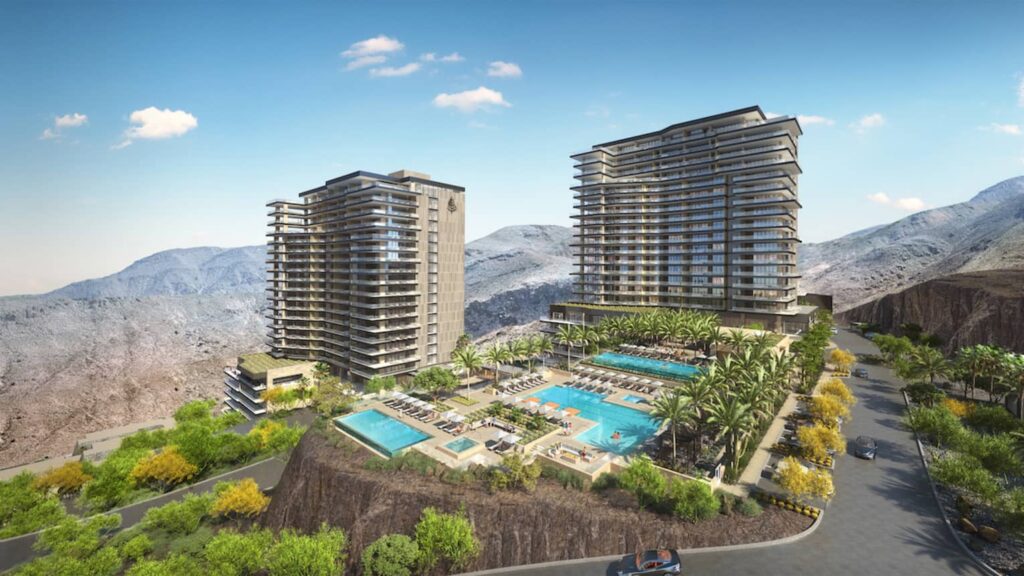
For the first time in Henderson's history, two high-rise towers are climbing straight out of a mountainside. Four Seasons Private Residences Las Vegas is taking shape within the guard-gated MacDonald Highlands community, perched on the McCullough Mountains with sweeping views of the Strip below. It's a $1.3 billion partnership between Four Seasons, Azure Resorts & Hotels, and Luxus Developments, and it's quickly become one of the most talked-about projects in the valley. Two Towers on the Mountainside Designed by architecture firm WATG, the development pairs a 24-story north tower with a 25-story south tower, together holding 171 high-rise residences plus six family-style villas. Interiors range from roughly 2,300 to more than 8,600 square feet, with private elevators, private garages, and outdoor terraces built into the larger units. Pricing starts around $3.5 million, with Sky Villas listed between $15.5 and $16.25 million and penthouses starting near $25.5 million. Resort-Level Amenities Wolfgang Puck Fine Dining Group is the exclusive food and beverage partner for the first towers, and residents will also have access to Noble Heights, a signature restaurant and wine bar from Elizabeth Blau and Chef Kim Canteenwalla that will be open to the public as well. Beyond dining, the project sets aside more than 90,000 square feet of resident-only space, including three resort-style pools, pickleball courts, a golf simulator, a pet spa, an auto spa, wellness facilities, guest suites, and private chef service. Where Construction Stands Today Site work and foundations are finished, and both towers are now rising vertically at roughly one floor per week, according to recent coverage of the project. Both towers are on track to top out by the end of 2026, with completion also targeted for late 2026 and residents expected to begin moving in during the first quarter of 2027. On the sales side, the project has surpassed $725 million in total sales and secured $781 million in construction financing, leaving a shrinking pool of available units as the towers near delivery. What It Means for Henderson Buyers A project of this scale sets a new ceiling for the Henderson luxury market and gives buyers a mountaintop alternative to Strip high-rise living. If you're considering a reservation, our Premier Homes Real Estate new home specialist can walk you through builder contracts, pricing structures, and how a project like this compares to other MacDonald Highlands offerings. One thing to know before you ever set foot on the sales floor: new home builders only recognize a buyer's agent if that agent is registered on your very first visit to the sales office or model home. Bring your Premier Homes agent with you from the start — a builder will not add representation after the fact, and going in unrepresented means giving that up for good. Many buyers at a glamorous property like this will be part-time residents who split their time between Henderson and elsewhere. For those owners, Premier Homes Property Management offers a contracted Lock-and-Leave service that goes beyond basic upkeep — maintaining the residence, coordinating with building staff, and arranging selected concierge services, including chauffeured luxury sedan pickups, so the home is ready and waiting the moment you're back in town. Whether Four Seasons Private Residences ends up being your next home or simply the project that redefines what's possible on a Henderson hillside, it's worth watching as the towers climb toward completion over the next several months. Thinking about buying, selling, or managing a luxury property in Las Vegas, Henderson, or the surrounding valley? Contact Premier Homes today — our Real Estate, Business Brokerage, and Property Management teams work together so you get the benefit of the whole firm's knowledge, not just one agent's.
Read more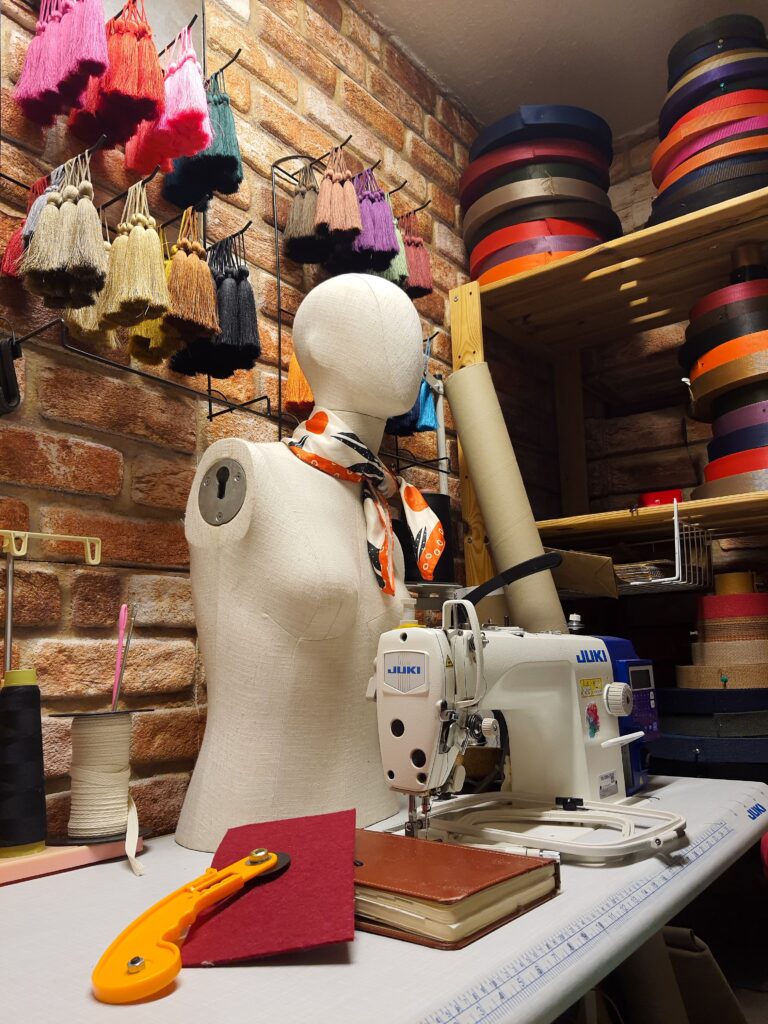
Not every business needs a storefront, a loan, or a leap of faith. Some of the most successful small manufacturers in the country started on a spare bedroom desk or in a garage corner, and grew one order at a time until the founder needed real square footage. Craft-based businesses are especially well suited to this path, because the tools of the trade — whether that's a sewing machine or a 3D printer — tend to be small enough to start with and profitable enough to justify upgrading. These businesses generally fall into two camps: traditional crafts, where the value is in the maker's hands and years of skill, and computer-assisted crafts, where a machine does the precision work and the maker's skill is in design, setup, and finishing. Both can turn into real income. Both can also outgrow a house. Here's how each one tends to play out. Traditional Crafts: Skill-Driven, Slow to Scale, Hard to Automate Traditional crafts are hand-intensive by definition. That's their strength — a handmade quality is exactly what customers are paying for — and it's also their ceiling. You can't 3D-print your way past the fact that a human has to make each piece. Woodworking. Cutting boards, small furniture, shelving, wall art. Entry cost is moderate — a table saw, a router, some hand tools — and a garage is plenty of space to start. The scaling problem is dust, noise, and lumber storage; those are usually what push a woodworker into a small warehouse or shop unit long before order volume alone would. Ceramics and pottery. Mugs, bowls, tile work, custom dinnerware. A wheel and a small kiln fit in a spare room, though kilns draw serious power and put off heat, so many home potters end up in a garage or basement fairly quickly. The real space crunch comes from drying and firing in batches — you need shelving for greenware at every stage, and that adds up fast. Leathercraft. Wallets, bags, belts, custom goods. This is one of the easiest traditional crafts to start at a kitchen table — hand tools, a cutting mat, and hides take up very little room. It scales slowly because each piece is stitched and finished by hand, so growth tends to come from hiring additional crafters rather than needing more square footage — though bulk hide storage and a cutting/finishing station do eventually want their own room. Sewing, quilting, and embroidery. Apparel, quilts, custom embroidery, home goods. A machine or two fits on a table. Fabric storage is the first thing to outgrow a closet, and once you add a second or third machine (or an embroidery machine that runs multi-hour jobs unattended), a dedicated room becomes a small studio, and a small studio becomes a warehouse bay lined with fabric bolts. Knitting, crochet, and yarn work. Finished goods or dyed yarn for other makers. About as low-footprint as it gets to launch — needles, a skein winder, maybe a dye pot. Yarn dyers scale into warehouse space mainly for drying racks and inventory, not equipment. Soap and candle making (non-food, cosmetic). Bar soap, lotion bars, artisan candles. Cheap to start with a few molds and a stovetop or wax melter. Scaling means bigger batches and cure/dry storage — soap needs weeks of curing shelf space, which is usually the first thing that won't fit at home anymore. Jewelry and metalsmithing. Beading, wire work, small metal casting. Extremely low barrier to start — a workbench and hand tools. If it grows into metal casting or soldering at volume, ventilation and safety requirements often force a move out of a residential space regardless of order volume. Traditional-craft pattern: the trigger to move out isn't the machine, it's storage — raw material, drying/curing time, and finished inventory. Growth is also capped by hands-on-hours, so many traditional-craft businesses expand by adding crafters before they add a warehouse. Computer-Assisted Crafts: Machine-Driven, Fast to Scale, Space-Hungry Early Computer-assisted crafts flip the equation. The machine does repeatable, precise work, which means one person can run several jobs at once — but the machines themselves are bigger, noisier, and often need dedicated ventilation or power from day one. 3D printing. Miniatures, functional prints, personalized gifts, prototyping for other businesses. The single easiest computer-assisted craft to launch from home — one printer fits on a desk, and a $200–$800 machine gets you a real product line. It scales beautifully at first: add printers, and you add capacity without adding much space, since printers can be stacked and run unattended overnight. The push to a warehouse usually comes when you're running 8–10+ printers (heat, noise, and power draw become real issues) or when filament and packaging inventory outgrows a closet. Laser cutting and engraving. Wood signs, acrylic displays, coasters, personalized gifts. Slightly higher barrier than 3D printing — a decent laser and proper ventilation (venting to the outside, ideally) are non-negotiable even at home. Very fast production once running, which means material storage (sheet goods) becomes a space problem quickly. This is often one of the faster movers to warehouse space, simply because sheet material doesn't store well in a house. CNC routing and carving. Signage, furniture parts, engraved wood or metal. Bigger machines, bigger dust collection needs, and often too loud for a house with neighbors nearby. This is usually the first computer-assisted craft to require a garage at minimum, and it scales toward warehouse space faster than 3D printing or laser work because the machine footprint itself is large. Vinyl cutting and print-on-demand apparel. Custom decals, t-shirt designs, heat-transfer apparel. Very low startup cost and genuinely garage- or even closet-friendly — a cutter and a heat press don't take much room. Scaling is about throughput (more presses, more cutters) and blank-apparel inventory, which tends to be the first thing to outgrow a house. Computer-assisted pattern: these businesses can look enormous in output while still fitting on a desk — one printer or cutter can run unattended and produce all night. That makes them deceptively easy to scale past the point where a house makes sense, because production capacity grows faster than the space does. The move to a warehouse is usually driven by machine count, ventilation/power requirements, or raw material storage — not by needing more room to physically do the work. The Common Thread Across both categories, the decision to move from home to a warehouse rarely comes down to "I need more room to work." It comes down to storage (raw materials, curing/drying, finished inventory), machine count outgrowing available power and ventilation, or noise/safety issues that aren't fair to neighbors or family. Computer-assisted crafts tend to hit that wall faster, because a handful of machines can produce more than a handful of hands ever could. Traditional crafts scale more slowly, but their growth is more durable — it's built on skill and relationships that a warehouse alone can't replicate. Shipping and staffing are the other big trigger, and they hit both categories the same way. A one-person operation can only pack and ship what it has time for between making the actual product, and a house isn't built for it — there's no room for a packing station, a stack of boxes, and a daily pile of outbound orders without it taking over the living space. Bringing on even one helper changes everything, because it splits the business into two jobs running side by side: one person making the merchandise while another packs and ships it. That division of labor is often the real turning point. It's not just that a house runs out of space — it's that a house was never designed to have two or three people working different jobs in it at once, each needing their own station, supplies, and room to move. For someone deciding where to start: computer-assisted crafts are the faster path to meaningful side income with the least skill-building time, but they demand more attention to power, ventilation, and eventual space. Traditional crafts take longer to build a customer base but tend to have lower startup risk and a gentler ramp toward needing outside space. If your craft business has outgrown the house, Premier Homes can help with both sides of that move. Premier Homes Business Brokerage specializes in finding and leasing warehouse and workshop space for growing businesses across Las Vegas, Henderson, and the surrounding valley, matching you with a space that fits your equipment, storage, and shipping needs. And if the growth means finding the right home to launch or run your craft business from in the first place, Premier Homes Real Estate is ready to help you find it. Contact Premier Homes today to talk through what your next step looks like.
Read more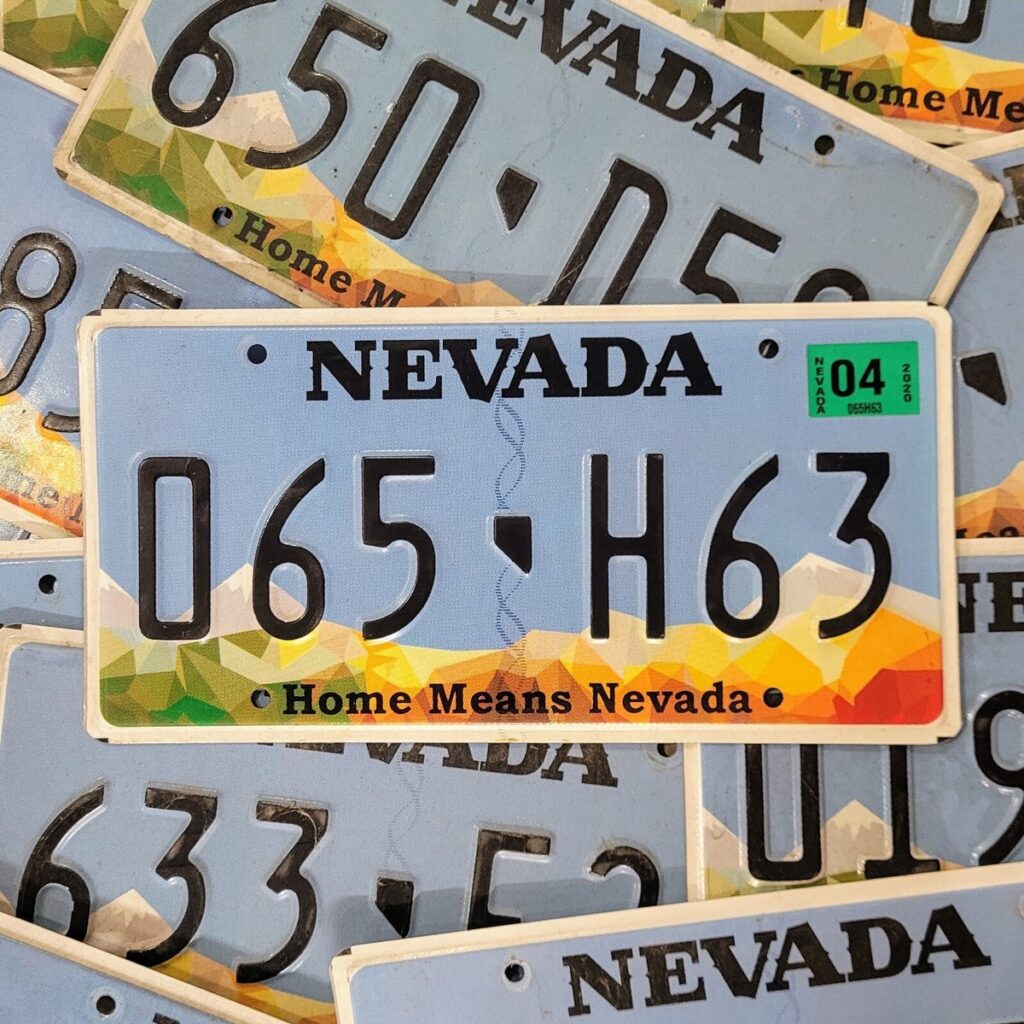
If you've just moved to Las Vegas or Henderson and renewed your car registration for the first time, you probably did a double take. Nevada's bill isn't a flat fee like the $50 or $75 sticker you might be used to elsewhere — it's three separate charges stacked together, and for a newer or higher-value vehicle, the total can run into the hundreds. Here's how that number gets built, why it's structured the way it is, and what Nevada residents get in return for paying it. How the Bill Is Actually Built Nevada registration is really three line items, according to the Nevada DMV: a flat Registration Fee, a value-based Governmental Services Tax (GST), and, in some counties, a Supplemental GST. Registration Fee: $33 for most passenger cars, regardless of the vehicle's value. It funds state road construction and the DMV's own operating budget. Governmental Services Tax: This is the part that surprises people. Nevada values your car at 35% of its original MSRP — not what you paid, and not what it's worth today — then depreciates that figure 5% in year one and 10% each year after, stopping at a floor of 15% of the original valuation. That depreciated number is taxed at 4%, with a $16 minimum. On a two-year-old car with a $20,000 MSRP, that alone comes to roughly $238 a year. GST money funds local governments, school districts, and the state General Fund. Supplemental GST: Clark and Churchill counties — which covers Las Vegas and Henderson — add a voter-approved extra 1% earmarked specifically for highway construction. On that same $20,000 vehicle, that's roughly another $60. Why It Feels Steeper Than Other States Most states charge a flat or weight-based registration fee that has nothing to do with what your car is worth. Nevada's GST is closer to a de facto property tax on the vehicle itself — and because it's based on original MSRP rather than depreciated resale value, a used luxury car can carry a noticeably bigger bill than its actual market value would suggest. The underlying reason is simple: Nevada is one of a handful of states with no personal income tax. Something has to fund schools, local government, and roads instead, and the GST — alongside sales and gaming tax — does part of that job. Tax Foundation data bears this out: Nevada's income tax burden is zero, but its combined sales and excise tax burden is among the highest in the country. It isn't a uniformly low-tax state — it's a state that collects differently, and vehicle owners feel more of that at the DMV counter than they would elsewhere. What You're Not Paying Because of It The trade-off is real, even if it doesn't show up on the same bill. Three things Nevada drivers skip because of how the GST is structured: No state income tax. The single biggest offset — every paycheck is free of a state withholding line. No separate annual vehicle property tax bill. A number of states — including Virginia, Missouri, Connecticut, North and South Carolina, and Kentucky — bill car owners a second, separate personal property tax each year, often $200 to over $1,000, on top of a normal registration fee. Nevada folds the equivalent of that tax into the GST you already paid at the DMV, so there's no second bill from the county assessor later in the year. Low overall property tax rates. Nevada's general property tax burden ranks near the bottom nationally, which matters more the longer you own a home here. A Review-Journal report on the state's overall tax burden found Nevada lands in the middle of the pack nationally once every tax is counted — not the lowest, but not the outlier the registration bill alone might suggest either. What This Means If You're Moving Here It's easy to fixate on one line item — the registration renewal that arrives in the mail — without weighing it against the paycheck that never gets an income tax deduction, or the property tax bill that never doubles as a second car tax. For anyone relocating to Las Vegas or Henderson, the honest comparison is the whole cost-of-living picture, not a single fee. That's the same lens worth applying to a home search here: sticker price, HOA dues, and property tax rates can vary block to block across the valley, and the neighborhoods that look most affordable up front aren't always the cheapest once everything is added up. If you're relocating to Las Vegas, Henderson, or the surrounding valley and want a clear-eyed read on the full cost of living — not just the sticker price of a home — reach out to Premier Homes Real Estate; our agents can walk you through neighborhoods, taxes, and total cost of ownership before you commit to a zip code.
Read more
...and Where to Blow off Steam Without Neighbors Calling It In Working from home in the Las Vegas valley is genuinely great, no commute, no state income tax, and a long list of neighborhoods built around exactly this lifestyle. It's also, some days, a lot. So this one's in two parts: where to actually set up shop, and where to go when a bad Zoom call has you wanting to yell into a pillow loud enough that you're worried someone will dial 911 on your behalf. What Actually Matters for a Home Office Here Before the neighborhood-by-neighborhood breakdown, the unglamorous but genuinely important part: internet infrastructure. Cox covers most of Clark County with plans up to 500 Mbps around $80 a month, and CenturyLink/Quantum Fiber reaches parts of Summerlin and Henderson at gigabit speeds for around $65 a month. Coverage varies block by block more than people expect, so it's worth checking serviceability at a specific address before you assume your dream house has fiber just because the listing says "high-speed available." And remember, Starlink now runs about $50 to $120 a month depending on speed tier, plus a one-time dish, and performs close enough to cable for real remote work that it's worth keeping as a backup option even if you're not counting on it as your primary connection. Summerlin: The Default Answer, for Good Reason Summerlin shows up on every version of this list because it earns it: quiet, master-planned streets, strong fiber coverage, and a growing bench of remote-work-friendly spots. The Coop Cowork on Village Center Circle caters to freelancers and small business owners who want community without the corporate office feel, and Regus in Downtown Summerlin covers private offices and meeting rooms if you need to look more buttoned-up for a client call than your kitchen table allows. Henderson: Green Valley, Anthem, and Inspirada Henderson's master-planned communities, Green Valley for families, Anthem for active professionals, and Inspirada for newer construction, offer the same suburban-quiet formula as Summerlin with a slightly different feel and, often, more house for the money. If you need to get out of the house occasionally, Henderson's Water Street District downtown and the coworking spot at Horizon Ridge both work well, the latter especially if you need a client-ready conference room on short notice. Downtown Las Vegas Arts District: For the Anti-Suburb Crowd Not everyone wants a quiet cul-de-sac, and the Arts District downtown is the real answer for remote workers who want walkability, coffee shops, and a genuinely creative, social scene instead of a quiet street. WeWork at Town Square and Work in Progress both serve that crowd well, and there's an active local remote-worker community built around informal coworking days and happy hours if you want the social side of an office without an actual office. Lake Las Vegas: Resort Quiet with a Professional Backup Plan If suburban quiet still feels a little too suburban, Lake Las Vegas is its own category entirely. It's genuinely isolated in the best way: you can walk or take a golf cart from your own house to MonteLago Village or one of the community's country clubs for a meal without ever getting in a car, and the same trail network we covered in Part 7 and Part 8 of our Getaways series is right there if you need to walk a problem out and think through an answer instead of staring at a screen. The one thing a fully residential resort community usually lacks, a professional space to meet a client, isn't actually a gap here: Lake Las Vegas has two full-service hotels, The Westin Lake Las Vegas Resort & Spa and the Hilton Lake Las Vegas Resort & Spa, both with real meeting rooms and business facilities, so you're never more than a short golf cart ride from somewhere you can actually put on a blazer and look like you have an office. It's a genuinely unusual combination for this valley: the isolation of a resort with a built-in fallback for the parts of remote work that still need a room and a table. When the Day Gets to Be Too Much (Without Alarming the HOA) Now for the part you actually asked about. If you need to physically get something out of your system without your neighbors peering over the fence, Las Vegas has options built for exactly this. Sin City Smash is a legitimate rage room, smash plates, TVs, even a car if you spring for it, in a padded, supervised space built to absorb exactly the kind of noise that would otherwise get a text from your HOA. On the calmer end, IMR Float in Henderson offers float tanks, infrared sauna, cold plunge, and sound baths, total sensory shutdown, no yelling required, and genuinely private. If you'd rather punch something with a professional watching your form, CKO Kickboxing runs beginner-friendly classes built around exactly this kind of stress release, with a free trial class if you want to test it before committing. And if you just need wide-open space and don't want to spend anything, this is where we'll shamelessly point back to our own Southern Nevada Getaways series: Valley of Fire from Part 2 or Clark County Wetlands Park from Part 7 will both get you far enough from other people that you can yell into the desert air and nobody's calling anybody about it. The Real Estate Angle: Privacy Is a Feature, Not Just a Preference Here's where this actually connects to house hunting: how much freedom you have to blow off steam at home, build a home gym, put in a punching bag in the garage, or just pace around the backyard yelling at your phone, depends a lot on lot size and HOA rules, not just square footage. Larger lots in communities like Anthem, Inspirada, and Seven Hills tend to come with more physical distance from the next house and more relaxed rules about what you can do in your own backyard. Tighter Summerlin villages and townhome-style HOAs often look and feel calmer, but they also mean closer neighbors and stricter noise and modification rules. Neither is wrong, it depends on whether you want a rage room built into your garage or you'd rather just drive to one. If working from home, and occasionally losing it a little, is part of your actual lifestyle plan, that's worth bringing up with your agent early, not after you've closed and discovered your new HOA has opinions about home gyms. Premier Homes Real Estate can help you weigh lot size, HOA rules, and internet availability alongside the usual bedroom-and-bathroom count. Working remotely and house hunting in Las Vegas or Henderson? Contact Premier Homes today — our Real Estate, Business Brokerage, and Property Management teams work together so you get the whole team's knowledge, not just one agent's.
Read more